Common Types of House Foundations
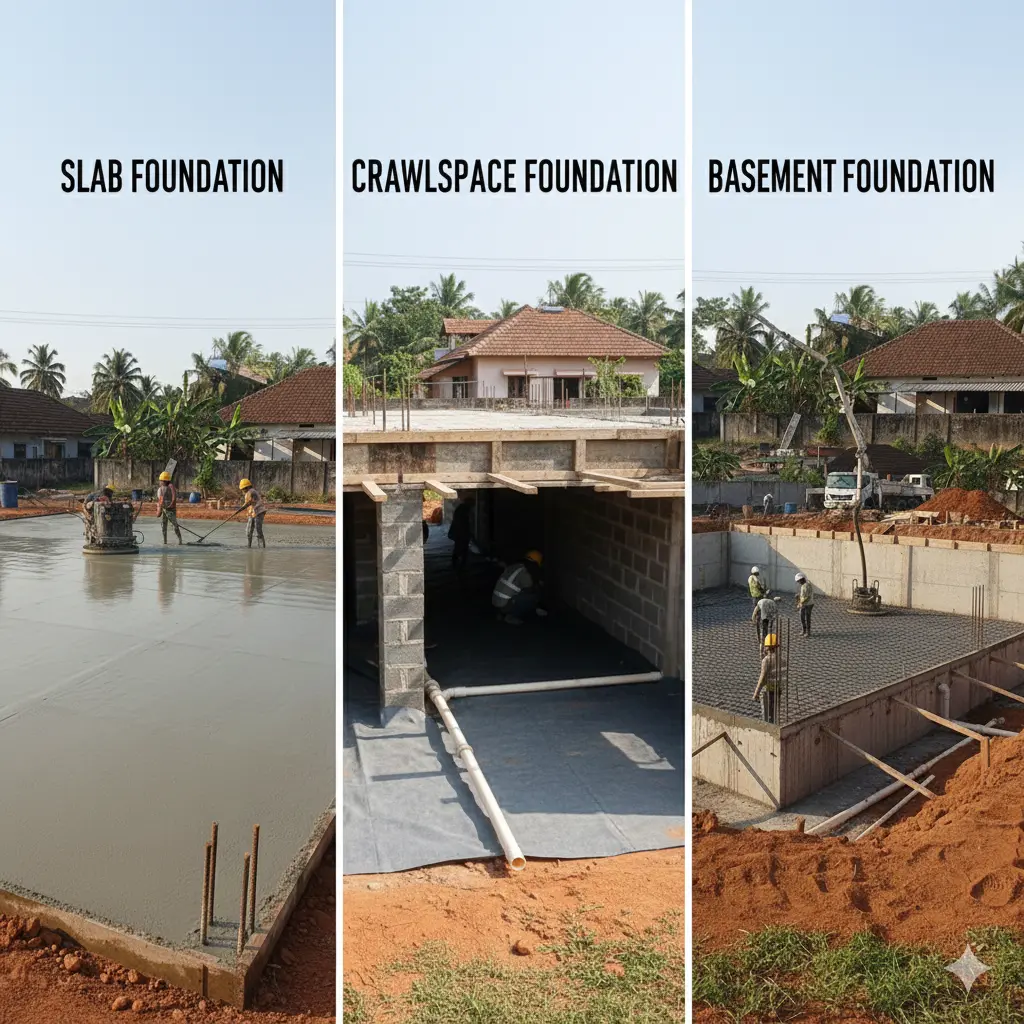
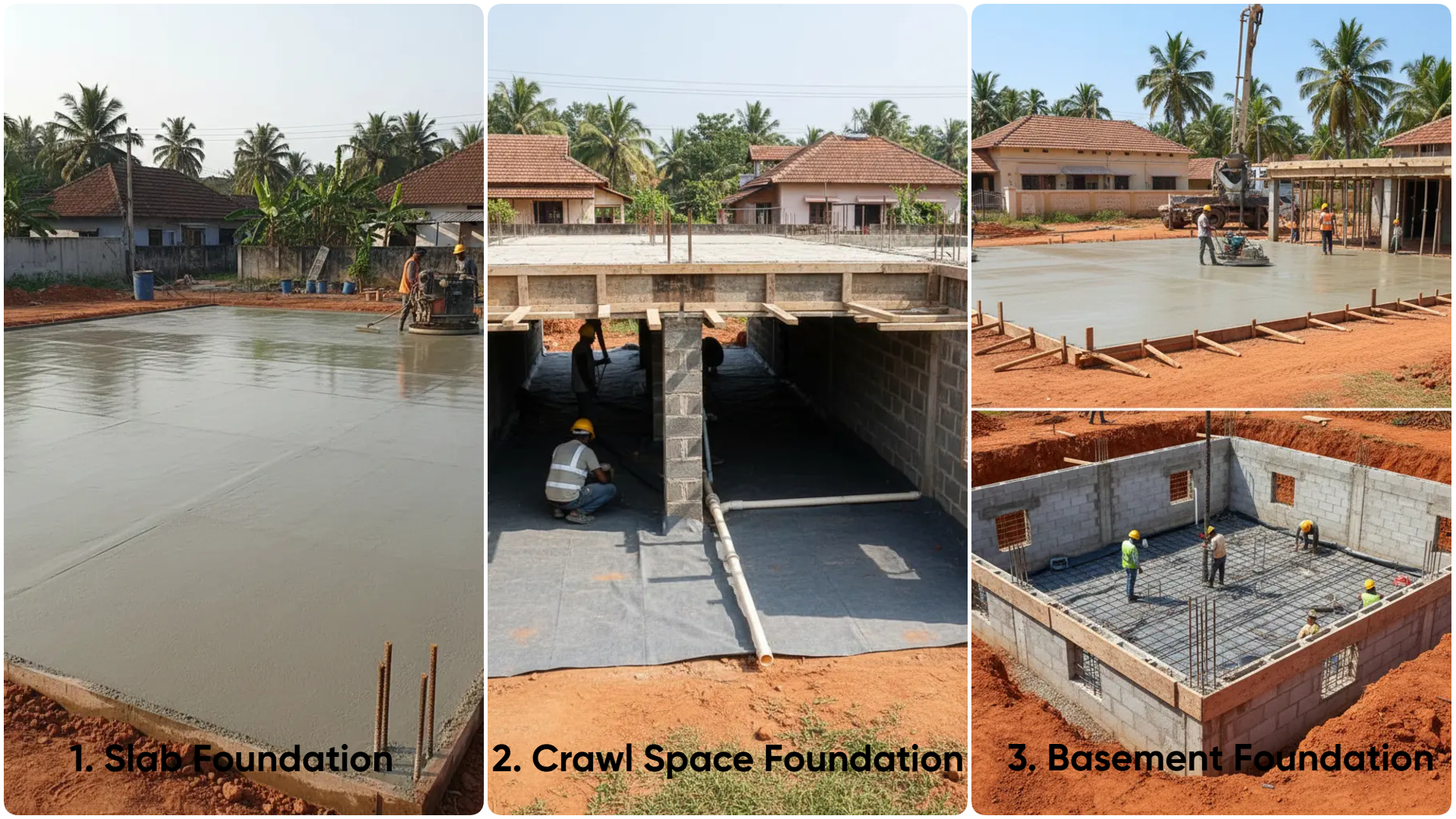
1. Slab Foundation
The term “slab foundation” refers to a thick, level concrete slab placed directly on the earth. It’s one of the most well-liked options, particularly in warmer climates like South India.
How it works:
The ground is levelled, a layer of gravel is placed for drainage, and a reinforced concrete slab is laid. Typically, pipes and cables run along the edges or are embedded in the surface.
Best for:
- Dry, hot climates with a low chance of freezing
- Simple, single-floor homes
- Budget-conscious projects
Pros:
- Quick and reasonably affordable to construct.
- No chance of flooding in the foundation area.
- Ideal for homes with minimal elevation changes.
Cons:
- After construction, plumbing and electrical lines are challenging to reach.
- Less insulation might make the flooring seem cold in the winter.
- Not appropriate for places with expansive clay soils and high water tables.
If you’re building a villa or bungalow in Coimbatore or Chennai, a slab foundation is a sensible and cost-effective option.
2. Crawlspace Foundation
A crawlspace foundation elevates the home slightly above the ground, leaving a small, accessible area (about 1-2 feet high) between the dirt and the floor.
How it works:
The process involves building concrete piers or short walls on footings that support the home. The room beneath is enclosed but not tall enough to go through comfortably.
Best For:
- Areas with moderate rainfall and the risk of floods
- Homes constructed on steep or uneven terrain.
- Regions where termites or moisture are a risk.
Pros:
- Easy access to plumbing, electricity, and ducting.
- Improved ventilation under the home, minimising dampness.
- Protects the home against minor floods and pests.
Cons:
- Can be more expensive than a slab
- Requires proper sealing and ventilation to avoid dampness and mold
- May attract pests if not maintained well
Crawlspaces are common in areas with higher rainfall or where the soil is prone to shifting. They’re a good middle ground between a slab and a full basement.
3. Basement Foundation
A basement foundation extends deep into the ground, forming a whole or partial level beneath the main floor. It is the most expensive and challenging method, but it provides the most significant benefits under the right conditions.
How it Works:
A deep excavation is done, followed by the construction of concrete walls and a floor. This space can be used for storage, converted into a utility room, or finished as a living space.
Perfect for:
- Cold climates with significant frost depth.
- Homes that require additional space (home office, gym, guest room)
- Areas with solid and well-drained soil
Pros:
- Increases usable square footage in your home.
- Ideal for insulation and energy efficiency.
- Prevents harsh weather and high winds.
Cons:
- The highest construction cost and longest build time
- Poor waterproofing increases the risk of water seepage.
- Requires adequate drainage and sump pumps in wet places
If you’re constructing in a mountainous area or in a place with cold winters, a basement foundation can be a wise long-term investment.
How to Choose the Right Foundation for Your Home
Now that you know the different types of house foundations, how can you choose the best one? Here are some practical aspects to consider:
The type of soil on your plot is a significant factor in your decision. Sandy soil drains well, making it ideal for slabs, but clay soil expands and contracts with rainfall, which can crack slabs. Piers or a crawlspace may be required on sites that are rocky or sloping. Always get a soil test and consult a structural engineer before deciding on a foundation type.
In hot, arid regions, a slab foundation is usually suitable. In areas with severe monsoon rains or a high water table, a crawlspace or well-waterproofed basement is preferred. In colder climates, deep foundations (such as basements) are required to go below the frost line.
Slab foundations are the most cost-effective and quickest to create. Crawlspace and basement foundations are more expensive and require longer to complete, but they provide long-term benefits. If you’re on a limited budget, a slab is a good place to start.
- Future Use and Space Needs
Think about how you intend to use the house. A basement or crawlspace is ideal for extra storage, a home office, or a rental unit. If you’re creating a basic, one-floor home, a slab might work.
- Local Building Codes and Norms
Different regions have varied standards for foundation depth, materials, and waterproofing. Always consult with local authorities and choose professional contractors who understand the local conditions.


 Quality & Efficiency