

People usually think about the design, materials, and budget when they plan a new house or building. Most people don’t think about what caused it. However, one overlooked step in the building process, soil testing in construction, can reveal whether your structure will last for decades or experience expensive issues in a matter of years.
Even experienced builders in Coimbatore emphasize the importance of soil testing before starting any project, as it plays a crucial role in ensuring long-term structural stability.
At first, it can seem like an unnecessary expense. In actuality, though, this modest investment can protect you from significant structural and financial risks down the road. Let’s figure out why.
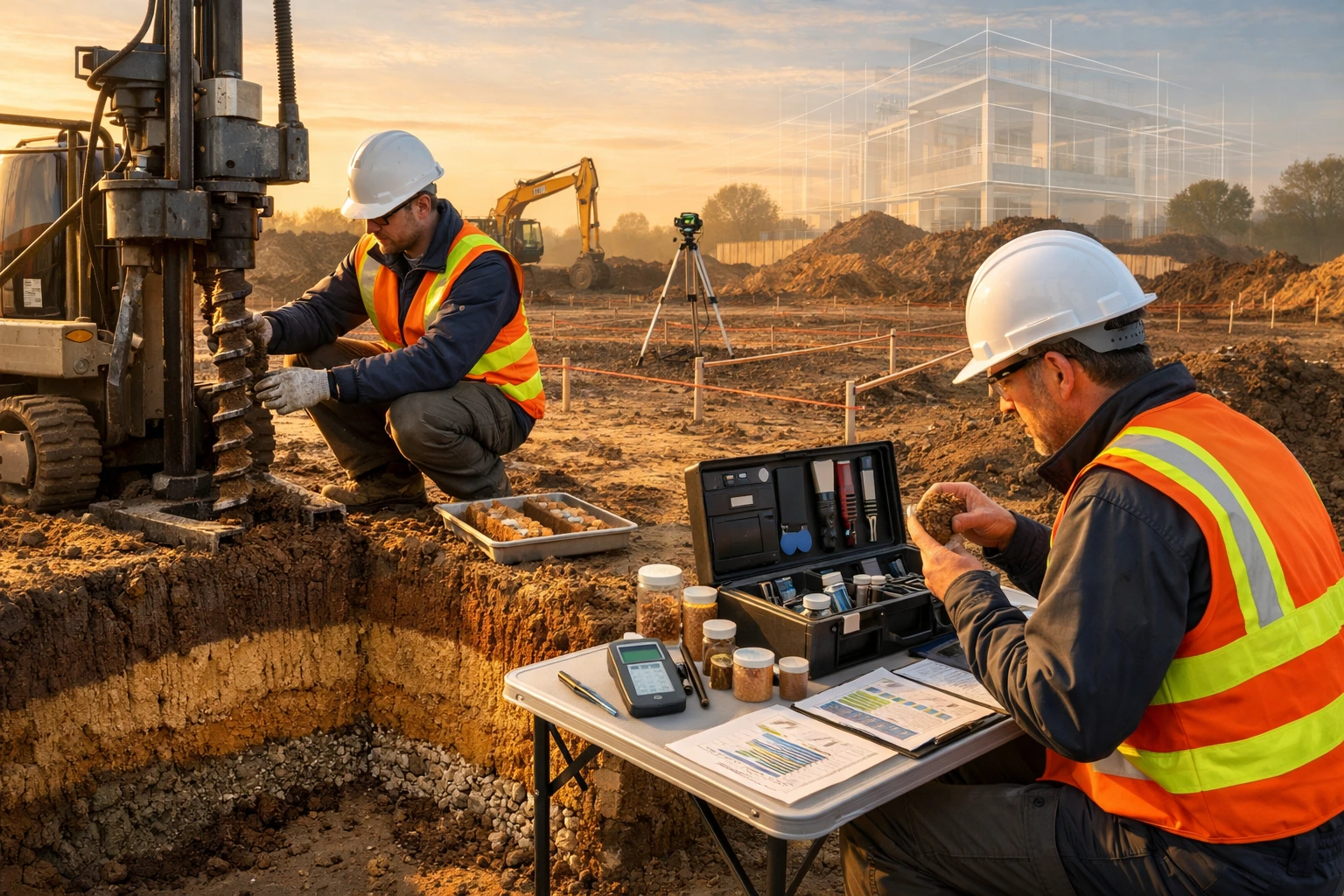
Before any building work begins, soil testing in construction is a critical process where engineers analyze the site’s soil. This analysis focuses on key factors such as soil composition, strength, moisture content, and the soil’s capacity to support the planned structure’s load.
These findings are used to determine:
Without this information, construction decisions are based on assumptions, which is a risky approach.
People often underestimate the significance of soil tests because they prevent issues that are not immediately visible. Ignoring this step, though, can result in major long-term problems.
The soil below every building bears the weight of the building. The structure may settle unevenly or crack if the soil can’t hold that weight. Engineers can design a foundation that fits the soil’s strength by testing the soil.
Problems with the foundation are some of the most expensive to fix. Fixing structural damage can cost lakhs and may even mean taking down part of the building. A simple soil test can help you avoid these extra costs.
Different kinds of soil act in different ways:
Testing the soil ensures the foundation design is appropriate for the soil type.
Unanticipated soil conditions can delay and increase the cost of projects. Testing makes things clear from the start, reducing uncertainty and helping you plan better.
A building with a well-designed foundation lasts longer and needs less upkeep. To achieve that durability, soil testing is essential.
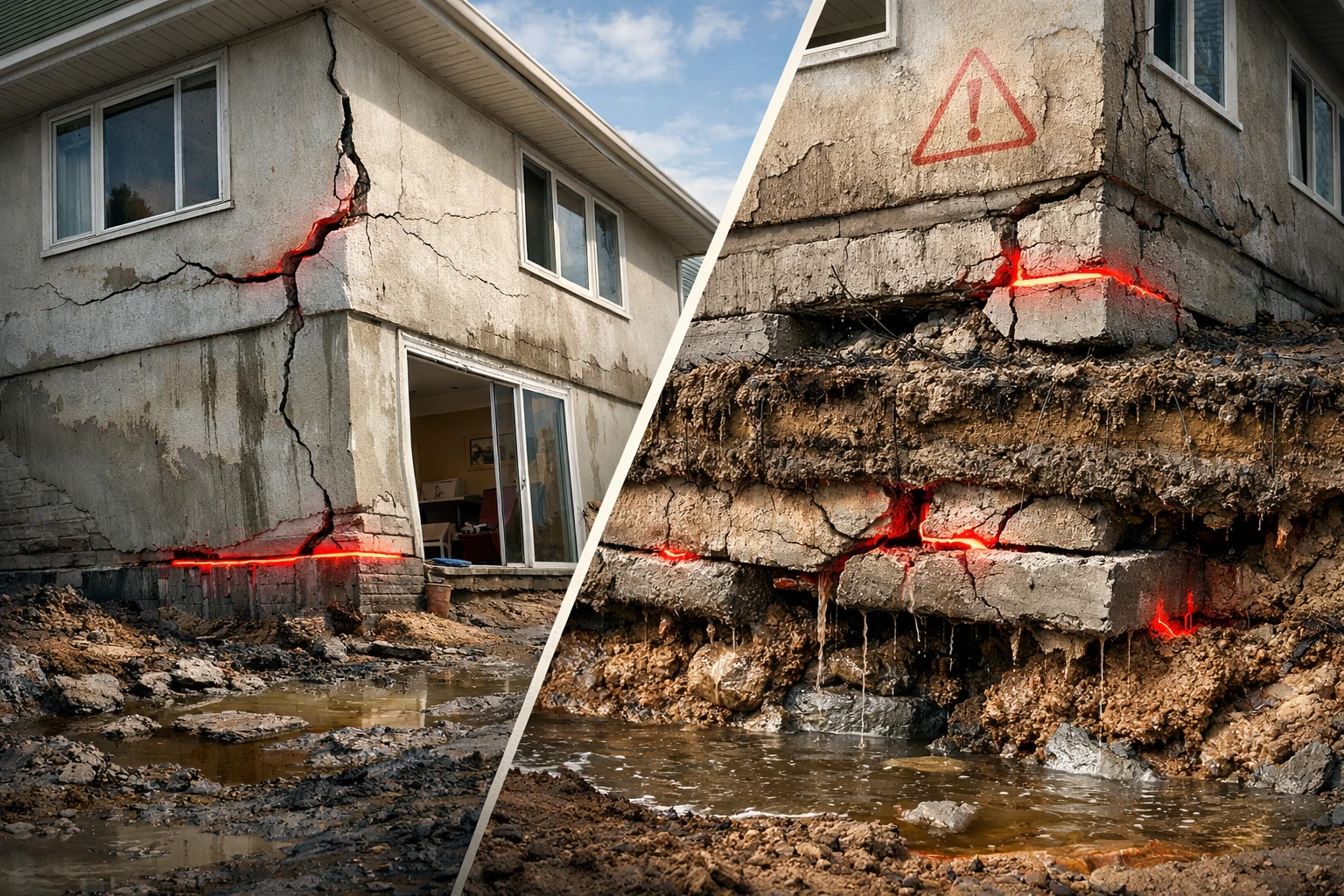
Skipping soil testing in construction risks serious structural failure, including foundation cracks, tilting, and collapse, due to unknown soil strength and water table levels. It often leads to massive repair costs (2–10x the test cost), legal liabilities, and regulatory delays. Without testing, you cannot determine the correct foundation design, leading to unsafe, unstable buildings.
Key Consequences of Skipping Soil Testing:
Structural Damage & Failure: Without knowing the soil composition, such as high clay content, which swells/shrinks, or soft, compressible ground, you risk uneven settlement, cracks, and possible building collapse.
Massive Financial Losses: Post-construction repairs for foundation issues are much higher than the initial cost of a soil test.
Inappropriate Foundation Design: Without proper soil bearing capacity data, foundations may be too weak to support the building or over-engineered unnecessarily.
Soil Saturation Issues: Ignoring testing means you may not anticipate a high water table, leading to flooded basements, wet walls, and unexpected soil erosion.
Legal & Regulatory Issues: Non-compliance with safety regulations can trigger stop-work orders by local authorities and create liability issues for owners.
Lowered Property Value: Buildings with known structural risks or lacking proper documentation have lower resale value and higher insurance premiums.
Why Even “Safe” Sites Need Testing:
Soil conditions can vary dramatically, even within a few meters. Do not assume your plot is stable based on surrounding developments.
You can see the process’s value more clearly when you understand it.
Engineers examine the land to determine where to collect the samples.
Using drilling methods, samples are taken from different depths.
Testing the soil’s strength, density, and moisture content.
A report with a lot of information is made, which includes:
This information helps engineers lay a safe, effective foundation for your building.
This statement might sound too strong, but it is a real and useful comparison.
If you don’t understand the state of the soil, you might end up:
All of these cost a lot of money. Soil testing is a small cost with a big effect.
Many people think that only big or commercial buildings need to have their soil tested. That’s not quite right.
You should consider soil testing in construction if:
Even small home projects can go wrong if the soil isn’t right.
People often forget that soil conditions can change a lot over a short distance. Two plots in the same area may have soil that acts very differently.
For instance:
Because of this variation, the importance of soil tests is even more crucial. Your land must be evaluated independently; you cannot use construction in the area as a guide.
Good construction is not just about visible quality; it starts with invisible decisions. Soil testing is one of those decisions that defines the strength and reliability of the entire structure.
When you base your project on a favorable soil test:
On the other hand, skipping it adds uncertainty right away.
The strength of your building doesn’t come from the materials you can see; it starts with the soil you can’t see. Ignoring this truth can have serious and expensive effects over time. The importance of soil testing is crucial because it can stop issues before they start, providing you with the knowledge and assurance you need to make wise building decisions. Spending ₹10,000 on soil testing in construction is not an extra expense; it is a smart investment that protects your entire project from future risks and unexpected costs. At Brick by Brick, we ensure every project starts with proper soil testing and expert planning so you can build not just faster, but smarter and stronger, with a foundation you can truly depend on for years to come.
 Quality & Efficiency
We manage interior, commercial, industrial, and residential projects from conception to conclusion.
We deploy premium, long-lasting, and environmentally friendly materials that are customised to meet the unique needs of your project.
Project schedules differ according to site circumstances, design, scope, approvals, and material availability.
Yes, we provide completely personalised building solutions that are suited to your unique requirements and goals.
Yes, we oversee all required approvals and permits to ensure a seamless building process.
We specialize in Residential, Commercial, and Industrial construction, along with expert Interior design services.
We specialize in providing top-notch construction and interior design services across multiple regions. Our targeted service areas include: