Why Is Curing Important?
Proper curing helps concrete develop the strength and durability intended by its mix design. It also raises the quality of the completed surface. Some major advantages of curing include:
- Proper curing is beneficial to foundations, columns, beams, slabs, walls, floors, roadways, and other concrete structures.
- It is especially critical in hot, dry, or windy weather, as these conditions can cause water to leave the concrete quickly.
Process of Curing in Construction
Curing in construction begins after the concrete is laid, compacted, and finished. Curing should begin soon enough to prevent excessive moisture loss while preserving the new surface.
Once the concrete is finished, workers follow proper curing procedures. Water, wet covers, plastic sheets, or curing substances may all be used in the procedure. The concrete must be protected throughout the term specified in the project specifications and relevant standards.
Weather conditions must also be considered. A good curing plan ensures that the concrete gains strength evenly and minimises the possibility of early damage.
How Long Should Concrete Be Cured?
Concrete should be cured for at least 7 days under normal conditions. In hot or dry weather, or when blended cement is used, a 10–14 day curing period is often recommended for better strength and durability.
Water Curing in Construction
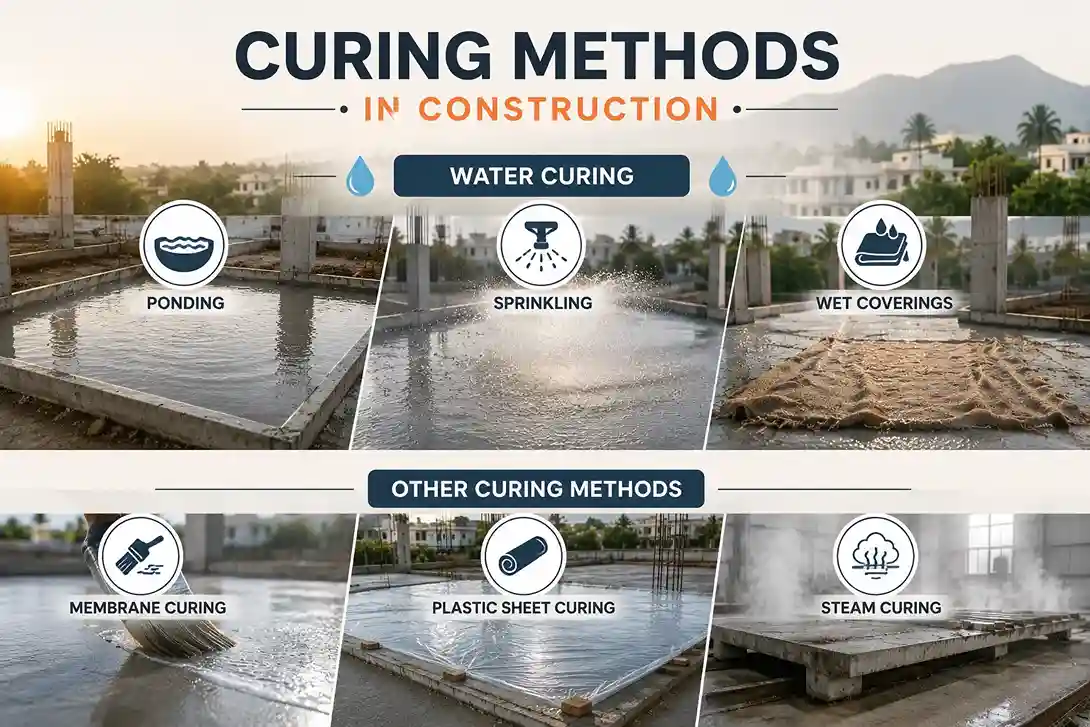
Water curing is one of the most frequent construction procedures. It keeps the concrete surface wet, ensuring sufficient moisture for hydration. There are various ways to use water for curing.
Ponding
Ponding is commonly used on flat surfaces, such as concrete slabs and floors. Small borders are created around the space, and water remains on the surface. When the site circumstances are right, This method can provide consistent moisture when site conditions are suitable.
Sprinkling
Sprinklers or fine spray can be used to apply water to the concrete surface. Water should be applied to prevent the surface from drying between applications. Avoid sudden wetting and drying.
Wet Coverings
Materials such as wet burlap or similar coverings can be placed over the concrete. They must remain wet throughout the curing process. If the covering dries out, it cannot provide the necessary moisture.
The water used for curing should be clean and suitable for concrete. It should not contain any materials that could damage the concrete or create unsightly stains on its surface.
Other Curing Methods
Water is not the only method for curing concrete. Another method is membrane curing. This process involves applying a curing agent to the surface. It forms a thin coating that slows the escape of water from the concrete.
Plastic sheets may also be used. They cover the surface, reducing evaporation. They should be carefully placed to avoid damaging new concrete.
Steam curing is commonly used for precast concrete products. Heat and moisture levels are managed to help the concrete gain strength faster. This enables factory-made concrete parts to be relocated or used sooner. However, steam curing must be monitored to minimise the risks posed by high heat.
Factors That Affect Curing
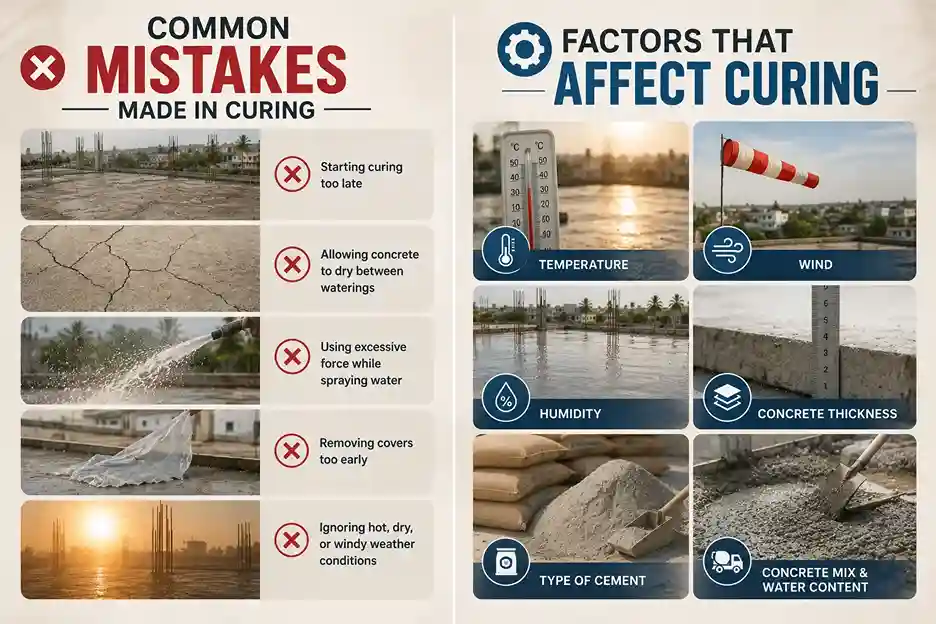
Several factors influence how well concrete cures. Temperature is among the most significant. Very hot conditions can cause greater water loss, whereas very cold conditions can inhibit hardening.
Wind and low humidity can also promote rapid evaporation. Thin concrete portions may lose moisture more quickly than thicker sections. The type of cement, concrete mix, water content, and other ingredients can all influence curing.
For these reasons, no single curing procedure is optimal for every project. Engineers and construction teams should select a method based on the concrete, weather conditions, location, and project specifications.
Common Mistakes Made in Curing
Poor curing can lower the quality of concrete. One common mistake is to begin the curing process too late. Allowing concrete to dry between watering cycles can reduce curing effectiveness.
Using excessive force when spraying water on fresh concrete can cause surface damage. Removing plastic sheets or other covers too early might also cause moisture loss. Ignoring hot, dry, or windy weather is another prevalent issue.
Good site supervision is essential. Workers should adhere to the project plan and ensure that the chosen curing procedure is used appropriately during the needed period.
Final Thoughts
Curing is a simple but important aspect of concrete construction. It provides the moisture and conditions that concrete requires to build strength. It also helps to prevent cracks, increase durability, and protect the completed surface.
Understanding curing in construction allows builders to make better judgements once the concrete is poured. Whether a project uses water curing, wet covers, membrane curing, plastic sheets, or steam curing, the procedure should be appropriate for the project requirements.
The curing process in construction may seem like a minor phase, yet it can have a significant impact on the final result. Proper curing makes concrete stronger, more durable, and better suited to operate over time. Good concrete is dependent not just on the correct ingredients and mix, but also on how well it is cared for after placement.
For a well-planned home construction project, choosing an experienced builder is equally important. Brick by Brick, one of Coimbatore’s leading home builders, focuses on quality construction and reliable execution from foundation to finishing.



 Quality & Efficiency