1. Get a Detailed Estimate Before Anything Starts
Why a Detailed Estimate Matters
A rough estimate is not a budget. It is a guess – and guesses consistently underperform when confronted with the reality of labour rates, material prices, and site conditions. Before committing to any contractor or breaking any ground, insist on a detailed, itemised estimate. This should cover every phase of construction: foundation, structure, roofing, electrical, plumbing, flooring, painting, and finishes.
A detailed estimate gives you a real baseline. It lets you compare quotes honestly, identify where costs can be optimised, and plan your finances with actual numbers rather than approximations. Poor pre-construction planning often causes unexpected cost increases. Starting with precision is the single most impactful thing you can do for your budget.
2. Choose the Right Contractor from the Start
A lower quote is not always a better deal. An inexperienced contractor may give you a low quote. But they may ask for more money during the project. This can cost you more in the end. The lowest quote may not always offer the best overall value. But they are more likely to deliver as promised.
Check a contractor’s track record. Visit completed projects. Speak to past clients. Understand how they handle cost variations and change orders. Brick by Brick’s residential construction team follows clear pricing and timelines. Any additional costs should be clearly communicated and approved before the work proceeds.
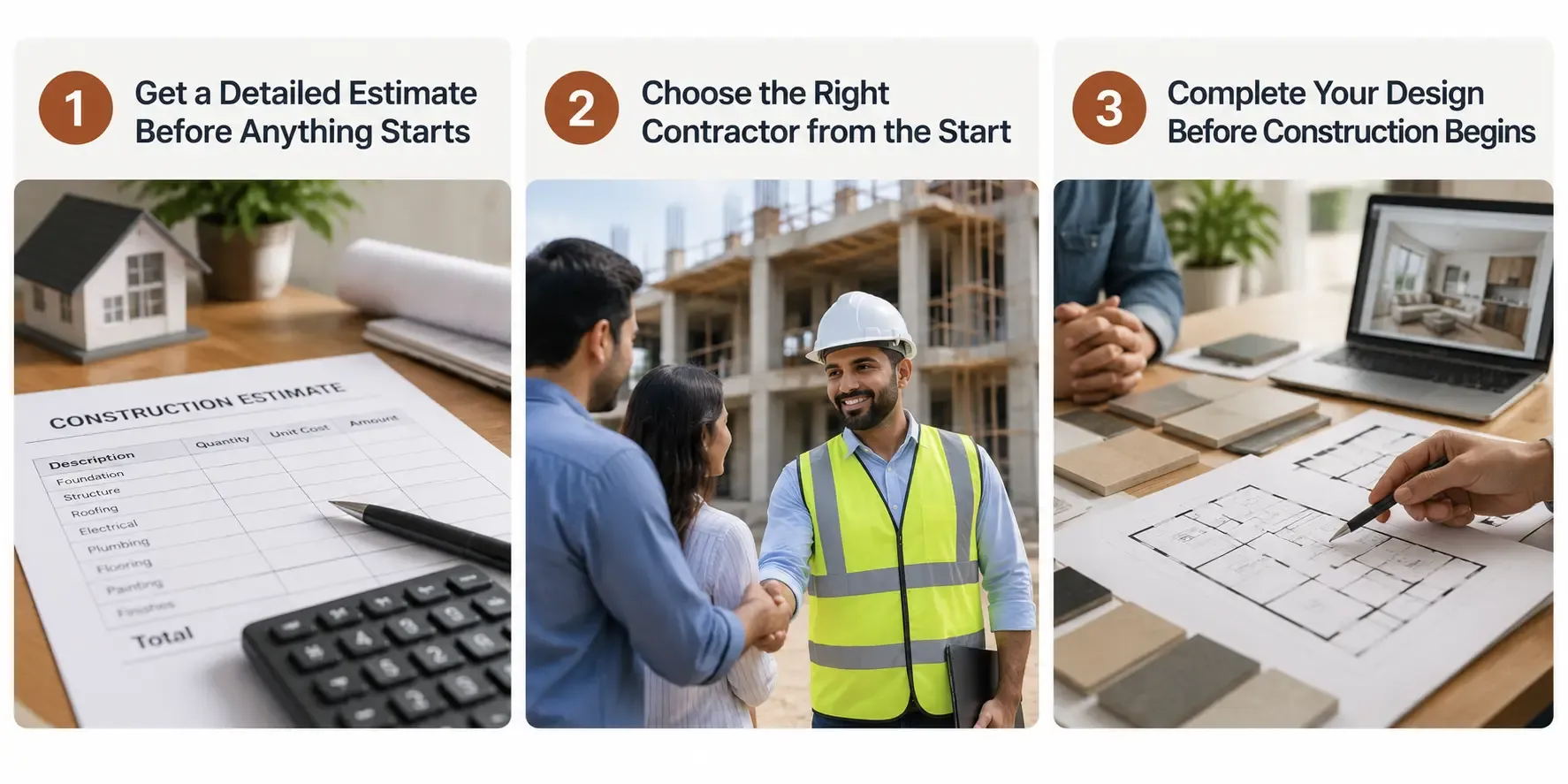
3. Complete Your Design Before Construction Begins
Why Design Changes Increase Construction Costs
Design changes during construction are expensive. A small change can seem simple. But moving a wall, adding a window, or changing the kitchen layout can affect many trades. This can lead to extra work and higher costs. Walls have to be broken and rebuilt. Electrical runs have to be redirected. Tile orders have to be restarted. Changes during construction can cost significantly more than changes made during the design stage.
What a Complete Design Plan Includes
Invest time upfront in a thorough design that you are genuinely committed to. Finalise the floor plans and elevation drawings first. Also finalise electrical and plumbing layouts. Choose kitchen and bathroom details before construction starts. Select all materials before work begins. Walk through the 3D model or drawings carefully. Ask questions. Make every change on paper – where it costs nothing.
4. Prioritise Structural Quality Over Surface Finishes
When money gets tight, people may cut costs on hidden parts. They may use thinner columns, less steel, or cheaper concrete. But this is the wrong place to save money. Strong construction keeps your home safe as it ages. It can also reduce costly repairs later.
The right approach is the opposite. Protect your construction budget by spending on structure. Be more flexible with finishes. Premium floor tiles can be upgraded later. A compromised foundation cannot be fixed without enormous cost and disruption. Brick by Brick’s approach to construction puts material quality and structural strength first. These are not negotiable. The focus on surface finishes comes later, when choosing the look and style.
5. Plan Your Material Purchases Carefully
Material costs represent a large share of any home construction budget. The same material can vary significantly in price depending on where and when you buy it. Work with your contractor to buy directly from manufacturers or authorised dealers. This can help you avoid extra costs from multiple middlemen. Buying suitable materials in planned quantities can help you negotiate better rates and reduce repeated procurement costs.
Plan material purchases in advance to avoid emergency procurements, which always cost more. Buying materials at the last minute can cost more. Last-minute purchases may limit your supplier choices and result in higher costs.
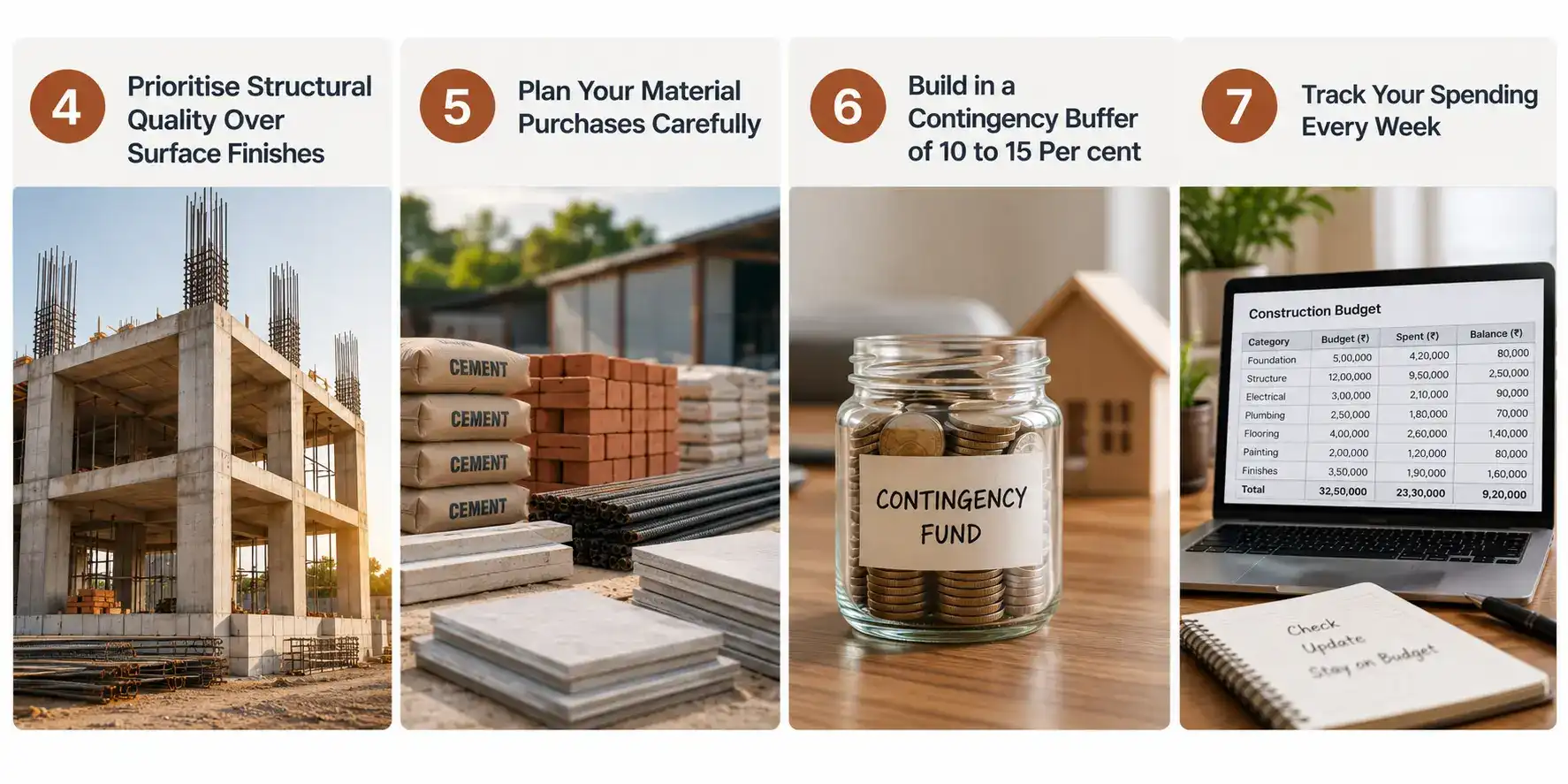
6. Build in a Contingency Buffer of 10 to 15 Per cent
No matter how well you plan, surprises happen. Unexpected rock during excavation. A delay in material delivery that requires a rescheduled trade. A design modification your family decides is essential once the frame is up. Keep a 10% to 15% contingency in your total home construction budget. This can cover unexpected costs. It can also help you avoid financial stress.
This buffer is not a license to overspend – it is an insurance policy. If you do not need it, it stays in your account. If you do need it, it keeps your project moving without a crisis.
7. Track Your Spending Every Week
Reviewing your budget regularly helps you identify overspending before it becomes difficult to correct. Track your spending against the approved budget every week. This helps you spot overspending early. You can then adjust other costs before the gap becomes too large.
Keep a simple spreadsheet to track your budget. Record the approved budget, money spent, and balance for each category. Update it regularly throughout the project. This simple habit can help keep your project on budget.
 Quality & Efficiency