5. What Factors Can Affect Approval?
Several things can affect approval. Building size and type, site measurements, road width, property classification, setbacks, floor space, and intended height are all important considerations.
Special situations may necessitate further clearance. Certain sites may require NOCs for fire safety, airport or aviation restrictions, water bodies, or other controlled areas.
Homeowners should review the approved plan and property limits. Differences between the selling document, patta, survey details, and planned drawings can raise questions during review.
6. Common Mistakes to Avoid
One common mistake is starting construction before getting the required house-building permit. Another common mistake is designing the entire house first and checking setback or road-width requirements later.
Homeowners should not rely just on the lowest construction estimate. Changes in approval processes can affect both time and cost. Adding storeys, enlarging rooms, or changing the approved construction without first ensuring compliance can cause complications.
Incomplete paperwork, missing drawings, incorrect property details, and failure to provide required provisions can all lead to changes and delays.
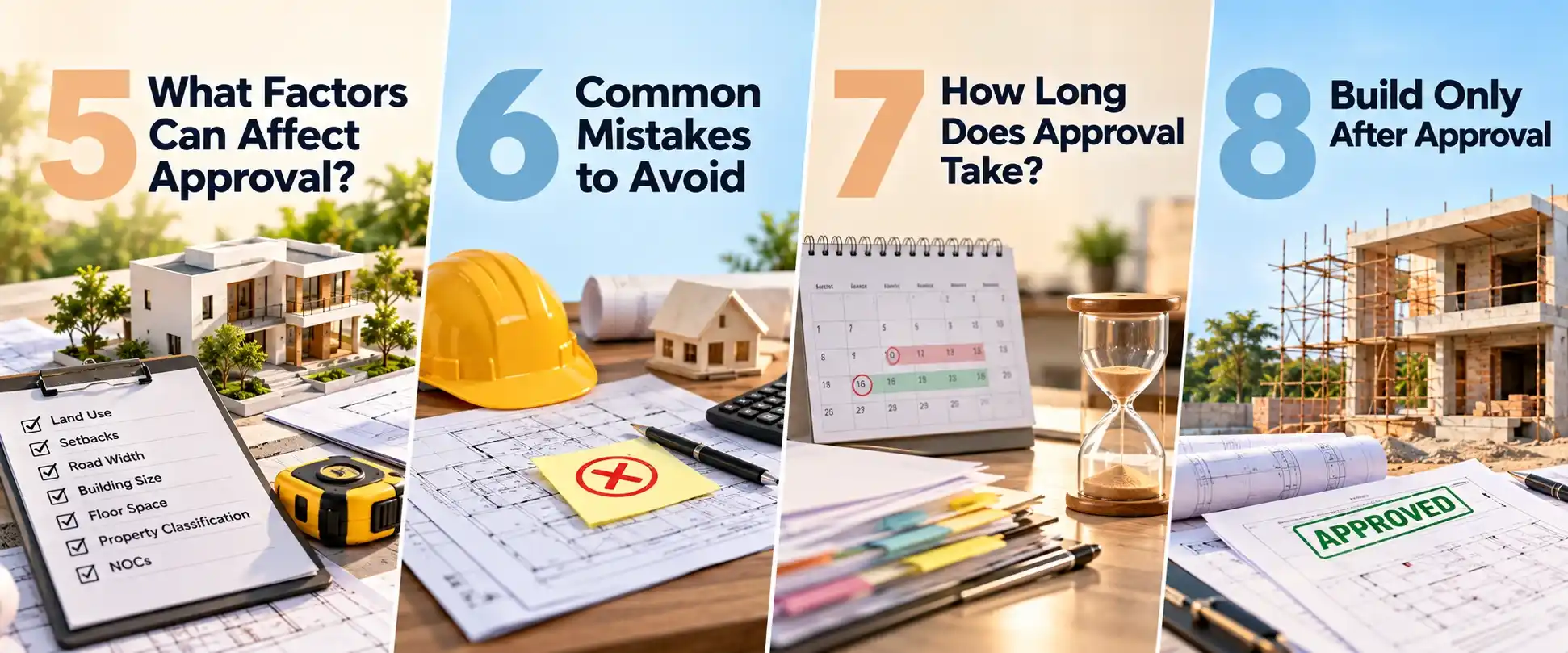
7. How Long Does Building Approval Take?
Approval time varies according to the property, application route, documents, corrections, and extra approvals. Complete applications can move faster; however, land-use concerns, title issues, NOCs, and drawing revisions may take longer.
Instead of relying on a generic estimate, check the current timeframe and status with the applicable authority or approval portal.
8. Build Only After Approval
Once you have received building approval, construction should proceed according to the approved drawings. Changes to setbacks, floor space, height, or construction may cause compliance concerns.
Before making any changes to the approved design or construction, consult your architect or engineer to see if revised approval is required. Keeping approved designs and permission documentation organized helps facilitate future inspections, service connections, financing, and property sales.

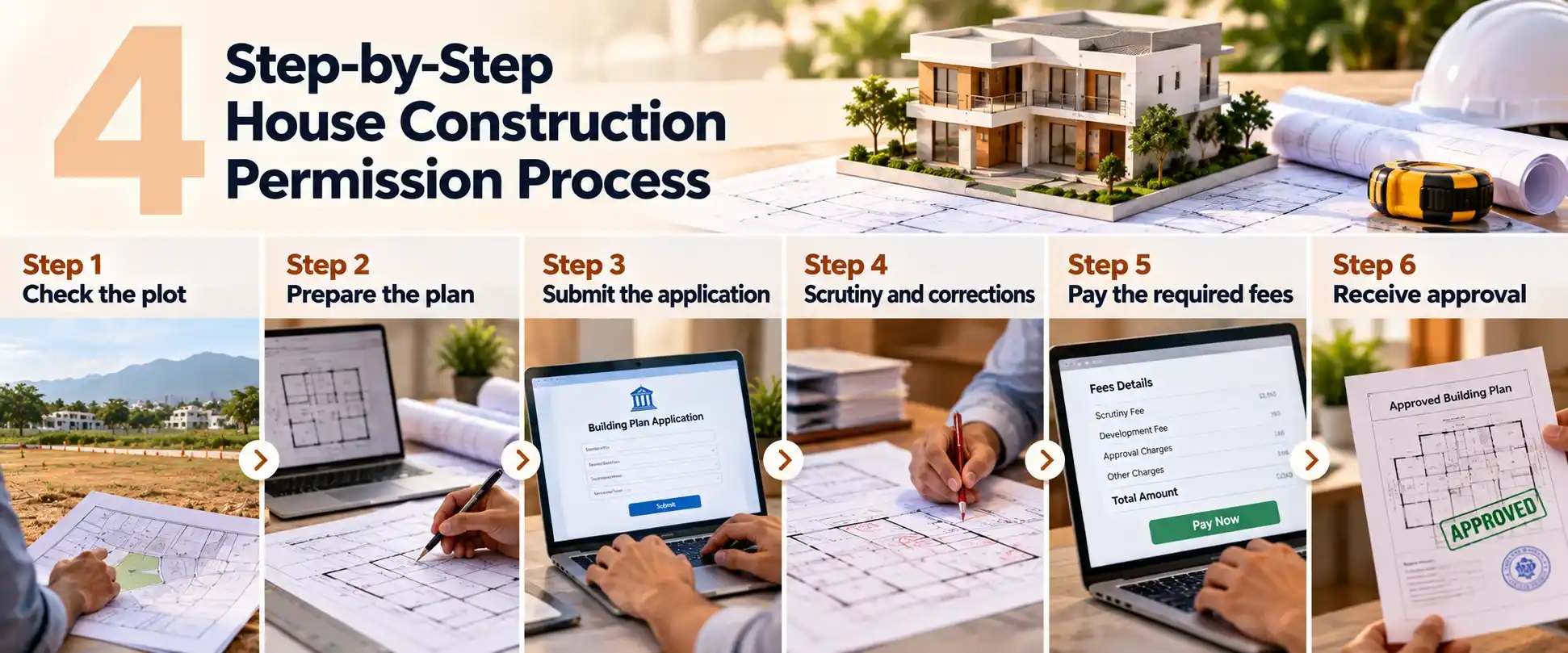 Step 1: Check the plot
 Quality & Efficiency