1. Main Factors That Determine Construction Cost
The first step is choosing the type of house you want to build. A small single-story home often costs less than a large two-story residence with high-end features. One of the most important considerations is the built-up area, as most contractors charge per square foot.
Your location is also important. Construction costs in central Coimbatore, Saravanampatti, Peelamedu, and developing suburban areas may vary depending on labour availability, transportation and site preparation. A plot with convenient road access can lower material delivery costs, whereas a small road or problematic site may raise them.
The architectural plan also affects the budget. Simple rectangular layouts are typically less expensive than designs with curves, wide cantilevered balconies, complex elevations, or abundant glass. Another key factor is soil condition. Weak soil may necessitate deeper foundations, more reinforcement, or unique structural solutions.
The final cost depends on the materials used, the number of bathrooms, kitchen requirements, electrical points, plumbing fittings, doors, windows, flooring, painting, and landscaping. As a result, you’ll need an early consultation with an architect and building contractors to develop a realistic estimate.
 2. Approximate Cost per Sq. Ft. and Construction Ranges
The approximate cost of building a home in Coimbatore in 2026 may fall into the following general categories. These values are approximate and may vary depending on design, site conditions, material brands, and contractor fees.
| Construction Category |
Approximate Cost per Sq. Ft. |
Suitable For |
| Basic |
₹1,800–₹2,200 |
Functional homes with simple finishes |
| Standard |
₹2,200–₹2,800 |
Comfortable homes with good-quality materials |
| Premium |
₹2,800–₹3,800+ |
Luxury homes with upgraded finishes and features |
A 1,500 sq. ft. house can cost between ₹27 lakh and ₹33 lakh for basic specifications, ₹33 lakh to ₹42 lakh for standard specifications, and ₹42 lakh to ₹57 lakh or more for premium specifications. These estimates typically cover building and finishing costs, not land purchases.
Before accepting a quote, ensure that it covers design costs, permission charges, compound walls, borewell work, septic tanks, utility connections, wardrobes, modular kitchen units, appliances, solar systems, and landscaping. Exclusions can significantly affect the final home building cost.
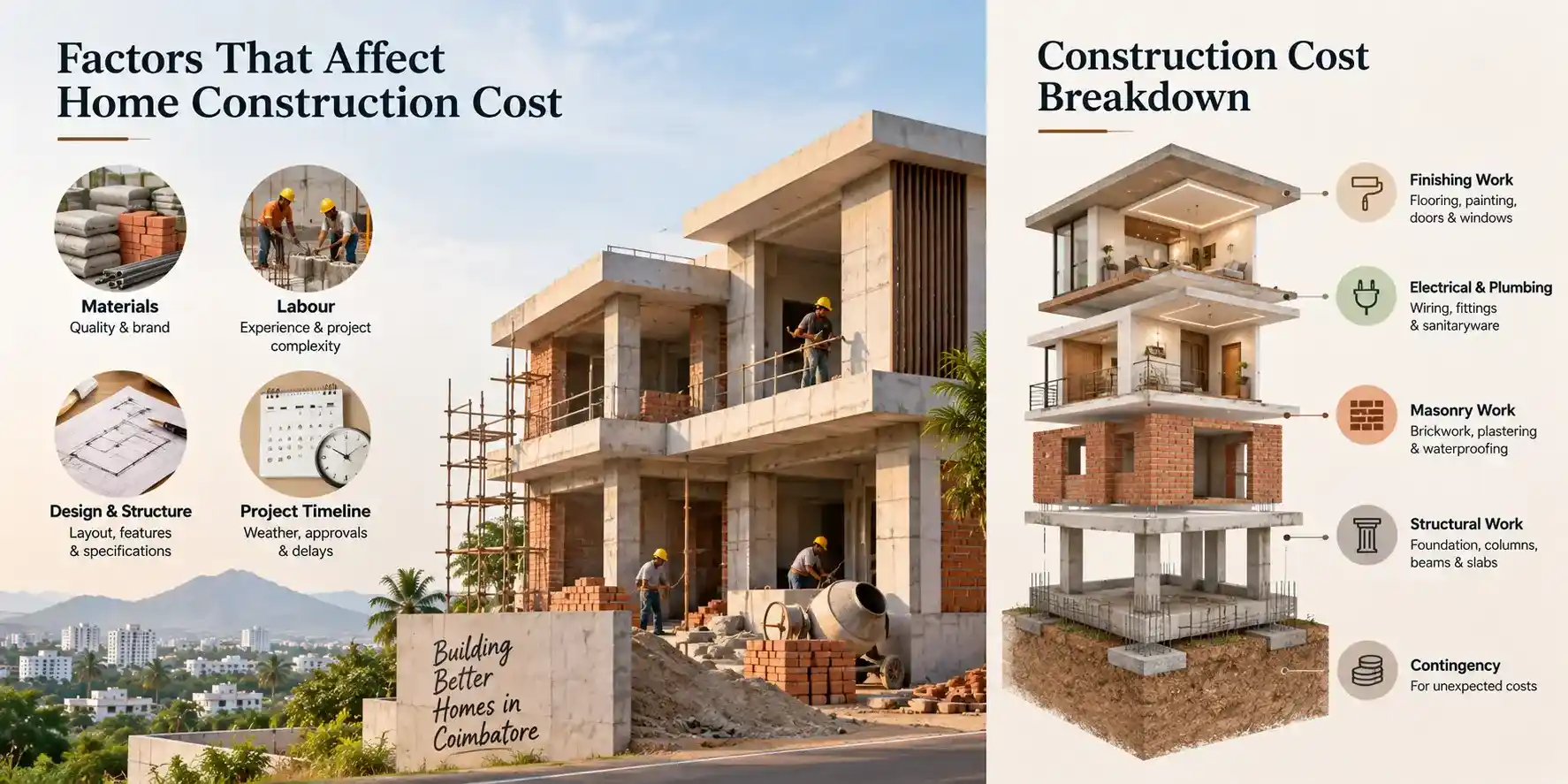
3. Factors That Affect Home Construction Cost
Material selection directly affects the cost of building a home. Cement, steel, bricks, blocks, sand, tiles, sanitaryware, paint, and wood or aluminium items are offered in a variety of quality levels. Choosing reliable materials is critical; select premium brands based on performance, durability, warranty, and value rather than appearance alone.
Labour costs are another significant component. Masons, electricians, plumbers, carpenters, painters, and fabricators may charge different rates based on their experience and the project’s complexity. Delays can increase labour costs, particularly when employees must return for adjustments or unfinished work.
Design and structure also influence costs. A home with several balconies, high ceilings, huge openings, ornamental columns, or intricate staircases may necessitate additional steel, concrete, formwork, and finishing. Insulation, shaded windows, rainwater collection, and solar provisions may increase the initial budget but lower future operating costs.
The project timeline should be properly planned. Seasonal rain, material shortages, design changes, and decision delays can push back the schedule. A lengthier construction period may result in higher supervision, labour, storage, and leasing costs. Clear designs, written requirements, and timely approvals all help to mitigate these hazards.
 4. Construction Cost Breakdown
A typical home-building budget can be divided into three primary components. Foundation and structural work may account for 25- 30% of the total cost. This includes excavation, footings, columns, beams, slabs, reinforcement steel, and concrete, which form the core of any construction company’s work.
Brickwork, blockwork, plastering, and similar masonry may contribute 10–15%. Roofing, waterproofing, and weather protection are also necessary, particularly during Coimbatore’s hot and wet seasons.
Flooring, wall tiles, painting, doors, windows, railings, and other finishing work may account for 20-30% of the price. Electrical and plumbing installations may cost an additional 10% to 15%, depending on the number of fixtures, points, and product quality.
Kitchen work, wardrobes, false ceilings, lighting, sanitary fixtures, and outside construction may account for 10% to 20% or more. Consider professional fees, permits, testing, transportation, and contingency funds separately.
Maintain a contingency reserve of at least 10% to 15% for unexpected expenses. Changes in design, soil conditions, material pricing, or client preferences can all impact the budget.


 Quality & Efficiency