Why Your Choice of Roof Matters
A roof is more than a cover. It is a key part of the building. It must move rainwater away, handle loads, reduce heat, and protect the rooms below.
As Britannica’s overview of roofing explains, roofs are important to both a building’s structure and design. Today, the choice depends on the climate, budget, building size, and future needs.
In Coimbatore, roof design should account for hot weather, seasonal rainfall, effective rainwater drainage, waterproofing, and heat control. These factors should be considered during the planning and construction stage.
Common Types of Roofs in Building Construction
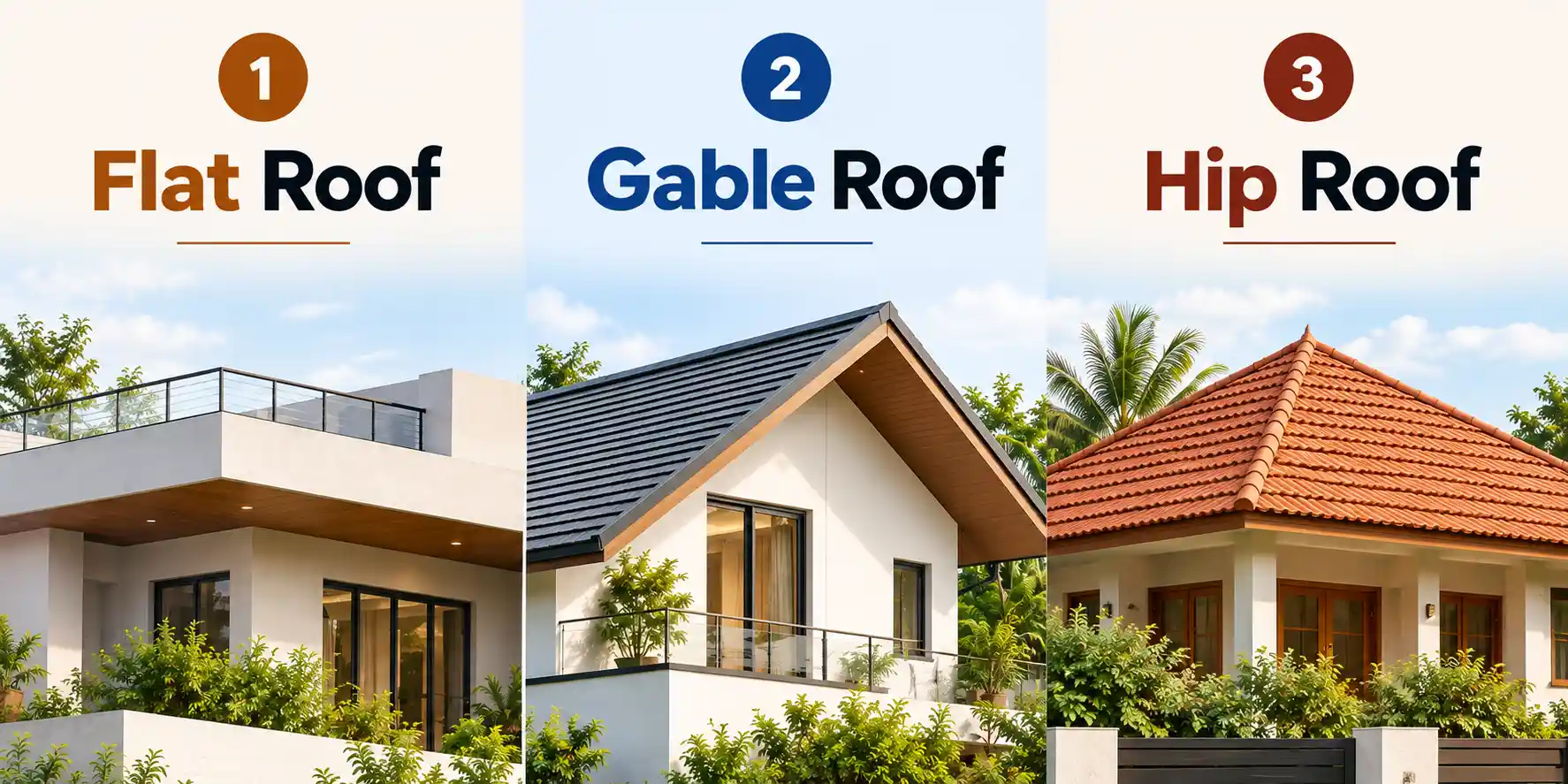
1. Flat Roof
Flat roofs are common in Indian homes and commercial buildings. They are not fully flat. A small slope helps rainwater move towards drainage points.
A flat roof can also be designed as a usable terrace and may accommodate solar panels, water tanks, and other building services when the structure is properly designed for the additional loads.
Waterproofing is very important. Poor drainage can cause water to stay on the slab and lead to seepage. Proper slope, drainage, and waterproofing help avoid these problems.
2. Gable Roof
A gable roof has two sloping sides that meet at the top. It is simple and works well in places with regular rain.
Rainwater runs down the slopes instead of collecting on the roof. The space below can also support good ventilation.
The open gable ends can face strong wind pressure. Proper structural support is important in areas with strong winds.
3. Hip Roof
A hip roof slopes on all four sides. It has no large open gable ends.
With fewer exposed gable ends, a hip roof can perform well in windy conditions when it is properly designed and structurally supported. It also gives the building a balanced appearance.
A hip roof needs more materials and skilled work than a simple gable roof. It may therefore cost more.
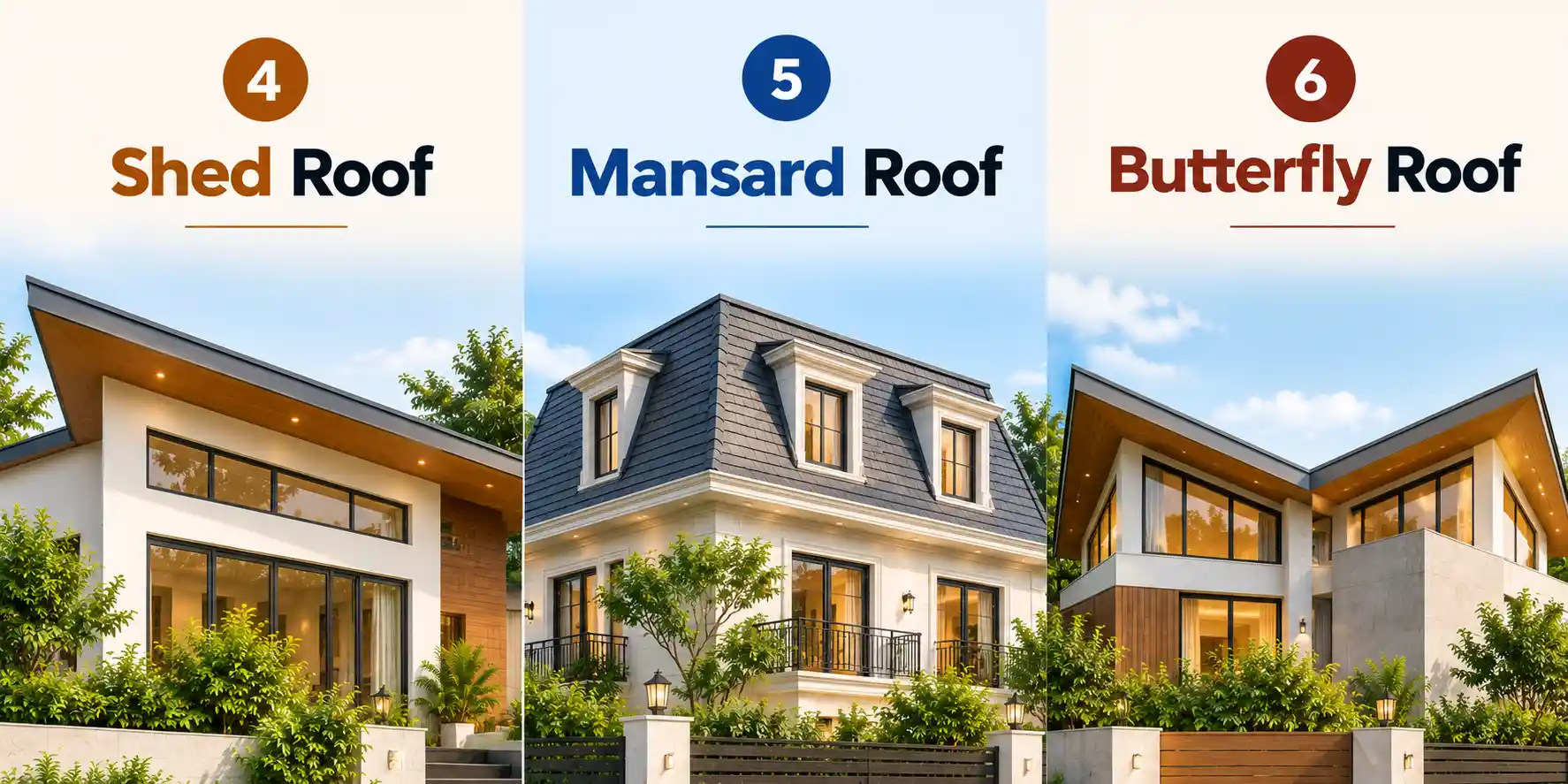
4. Shed Roof
A shed roof has one main slope. Its simple form works well for modern homes, extensions, garages, and workshops.
It can also allow high windows on one wall. These windows can bring more natural light into the building.
The design is simple, but the slope and drainage still need careful planning.
5. Mansard Roof
A mansard roof has two slopes on each side. The lower slope is steep, while the upper slope is flatter.
Its main benefit is the extra usable space it can create under the roof. This can help when a project needs more room.
Mansard roofs are more complex to build. They need careful design and usually cost more than simple roof forms.
6. Butterfly Roof
A butterfly roof has two slopes that fall towards a central valley. It creates a clear V-shaped profile.
It can give a modern home a strong look and can also support rainwater collection. However, the central valley needs strong waterproofing and good drainage. Poor detailing can cause leaks. Skilled design and construction are important.
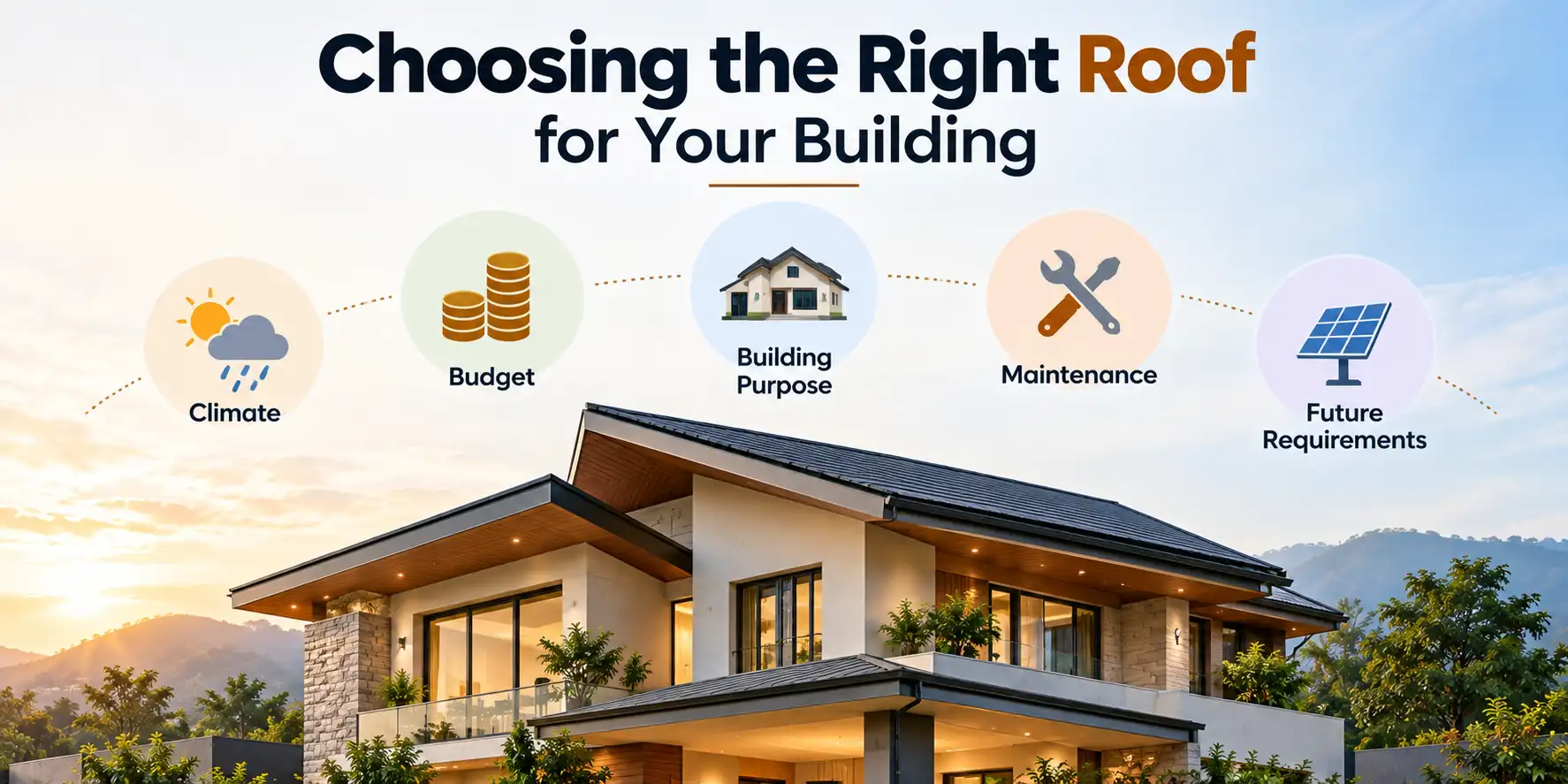
Choosing the Right Roof for Your Building
The right roof depends on more than appearance. Start with the climate. A rainy area needs good drainage, while a hot area needs better heat control.
Roof cost depends on the design, materials, labour, and structural requirements.
The building’s purpose is another factor. A family home may need a different roof from a warehouse or office. Large industrial buildings may need special systems for wide spaces.
Roof Design Types and Maintenance
Different roof design types have different maintenance needs. Before choosing a roof type, consider accessibility, waterproofing, drainage, and future needs such as solar panels or water tanks.
What Homeowners Should Ask Their Builder
Before work starts, ask about the roof slope, drainage, waterproofing, insulation, strength, and maintenance needs.
Also compare the starting cost with long-term value. A cheaper roof may cost more later if it needs frequent repairs.
Different types of roofs may suit different buildings. The best choice should balance cost, strength, function, appearance, and future needs.
If you are comparing roofing options for a new home, choosing an experienced Construction Company can help you evaluate roof design, structural requirements, waterproofing, drainage, and long-term maintenance based on your project needs.
 Quality & Efficiency