Choosing the correct building material is one of the most crucial decisions when building a house. Popular walling materials include conventional red bricks and modern Autoclaved Aerated Concrete (AAC) blocks. Both offer distinct benefits in strength, durability, insulation, build speed, and cost.

The choice between red bricks and AAC Blocks depends on construction cost, structural requirements, thermal insulation needs, and material availability. AAC blocks are widely chosen for their lightweight structure, thermal insulation, and faster installation, while red bricks are valued for their strength, availability, and familiarity among construction workers.

Understanding the differences between these materials can help homeowners make more informed decisions and choose the best option for their projects.

What Are AAC Blocks and Red Bricks?

Before comparing their performance, it is critical to understand how these two materials are produced and utilised.

AAC Blocks:  Autoclaved Aerated Concrete blocks are lightweight construction materials made from cement, lime, fly ash or sand, water, and an expanding agent. They are cured in an autoclave using high-pressure steam, resulting in a porous structure with small air spaces. This makes them lighter than traditional masonry materials and provides enough thermal insulation.

Red Bricks: Red bricks are traditional building materials made from natural clay that is moulded, dried, and burnt in kilns. They are commonly used in residential and commercial buildings because of their proven performance, availability, and familiarity to masons.

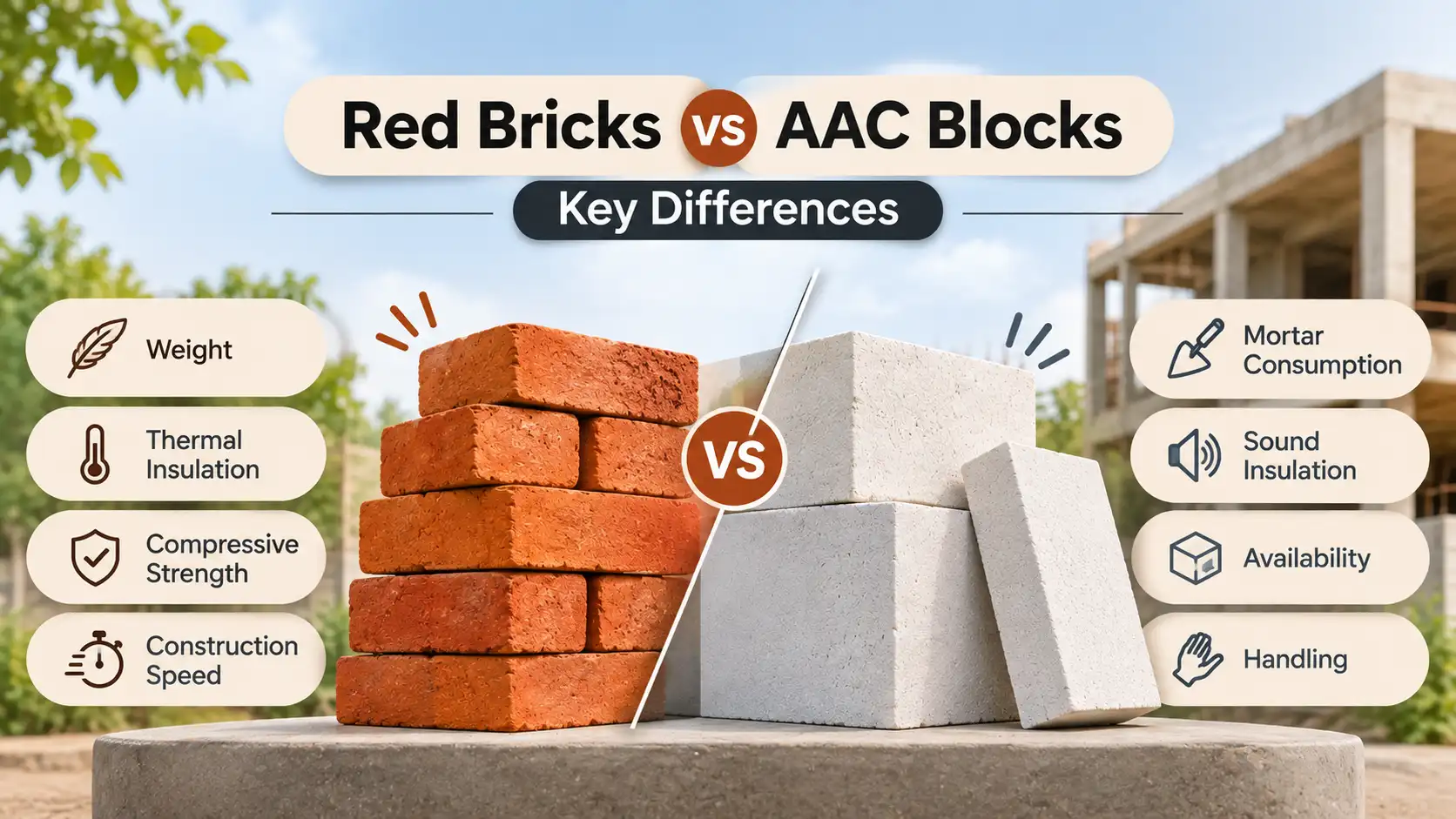
Red bricks vs AAC blocks showing differences in weight, thermal insulation, compressive strength, construction speed and mortar consumption

Red Bricks vs AAC Blocks: Key Differences

Both materials suit a variety of construction applications. Here’s a comparison of their primary characteristics.

S.no Comparison Factor AAC Blocks Red Bricks
01 Weight Lightweight Heavier
02 Thermal Insulation Better Comparatively lower
03 Compressive Strength Depends on block grade Depends on brick quality and class
04 Construction Speed Faster installation Relatively slower
05 Mortar Consumption Generally lower with thin-bed adhesive Generally higher
06 Sound Insulation Depends on wall thickness and assembly Benefits from greater wall mass
07 Availability Depends on local suppliers Widely available
08 Handling Easier to handle per unit of wall area Requires handling more individual units

The actual performance of both materials depends on product quality, specifications, wall thickness, and construction workmanship.

1. Strength and Durability

Strength is a crucial factor to consider when choosing materials for home building.

Red bricks are renowned for their compressive strength and longevity. When combined with appropriate mortar and construction processes, high-quality, properly burnt bricks can deliver dependable results.

AAC blocks are also strong enough for various non-load-bearing and partition wall applications in reinforced concrete-framed structures. However, their strength varies with density and grade.

For load-bearing applications, the material must meet structural design specifications. Neither material should be considered a substitute for good structural engineering.

Which one is better? The compressive strength of both materials varies depending on their grade and manufacturing quality. Their suitability should be assessed against the structural design requirements.

2. Thermal Insulation and Indoor Comfort

Thermal insulation is essential for keeping indoor temperatures comfortable, especially in warm climates like Coimbatore.

AAC blocks have multiple microscopic air spaces, which minimise heat transfer through walls. This reduces heat entering the building and can improve indoor thermal comfort.

Red bricks have a higher density and lower thermal resistance than AAC blocks of similar thickness.

Which one is better? AAC blocks often perform better in thermal insulation, making them a good alternative for dwellings where limiting indoor heat gain is important.

3. Construction Speed and Labour Requirements

Construction duration depends on material availability, labour skills, design complexity, and site conditions.

AAC blocks are larger than traditional red bricks, so masons can cover more wall space with fewer units. They also use less jointing material when placed with a proper thin-bed adhesive.

Red bricks are smaller, so they require more units and mortar joints to cover the same wall space. This can lead to longer installation times and more labour requirements.

Which one is better? AAC blocks often allow for faster wall construction, provided that qualified workers and proper installation materials are available.

4. Cost and Overall Construction Budget

When comparing AAC blocks to red bricks, the initial material cost is not the sole consideration.

AAC blocks may cost more per unit in some areas, but their larger size helps reduce mortar use, handling needs, and construction time.

Red bricks may be more cost-effective where local supplies are readily available. However, you should account for additional mortar, labour, and transportation costs.

Homeowners should examine the total cost per square meter of finished wall, which includes materials, labour, glue or mortar, plastering, transportation, and waste.

Which one is better? Neither alternative is consistently cheaper. The best decision depends on local material pricing, labour availability, and total installation costs.
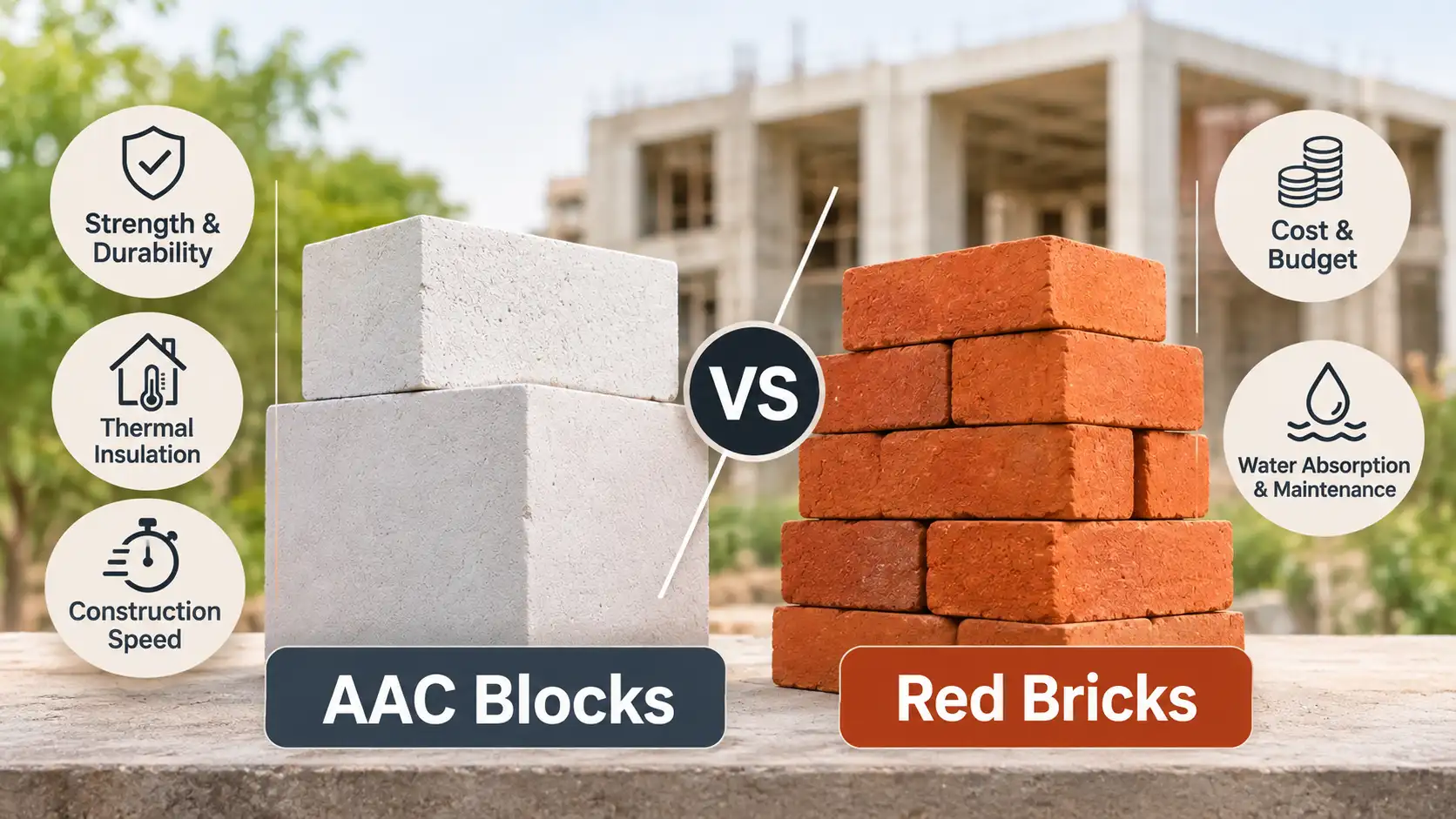
AAC blocks vs red bricks comparison for house construction

5. Water Absorption and Maintenance

Another crucial factor to consider is water absorption, especially in damp environments.

Red bricks can absorb water, depending on their quality and how they’re made. Proper curing, plastering, and damp-proofing can help prevent moisture damage to brick walls.

AAC blocks are also permeable and require proper moisture protection. Install them according to the manufacturer’s guidelines, including proper surface preparation, plastering, and waterproofing when applicable.

Which one is better? Both red bricks and AAC blocks can absorb moisture. Proper plastering, damp-proofing, and waterproofing are essential to protect walls from moisture-related damage.


Which is Better for House Construction in Coimbatore?

AAC blocks can be considered for Coimbatore homes because of their lightweight structure and thermal insulation properties. However, the choice between Red Bricks and AAC Blocks should also consider the building design, budget, material availability, and structural requirements.

Red bricks may be preferred where local availability, specialised strength requirements, traditional construction methods, or other design considerations make them more appropriate.

The right option should consider structural design, wall thickness, local climate, budget, and each wall’s intended use.

Working with an experienced Construction Company in Coimbatore can help homeowners assess these factors, select appropriate materials, and ensure proper installation.

Conclusion

When comparing red bricks to AAC blocks, no single material suits every construction project. AAC blocks are lighter, offer better thermal insulation, and can be built faster, while red bricks offer proven strength, are widely available, and are familiar.

The best choice depends on your project’s structural needs, budget, and long-term performance expectations. Instead of choosing a material based only on its initial cost or popularity, evaluate its overall fit for your home.

At Brick by Brick, we believe that exceptional construction begins with careful material selection and planning. Our staff helps customers make sensible construction decisions that result in comfortable, lasting, well-designed homes.

Planning to build your ideal home in Coimbatore? Connect with Brick by Brick to discuss your construction needs and make the best decisions for your home.