What Is the Best Solution for Water Seepage in Walls?
No single solution works for all walls. The right remedy depends on the moisture source and the extent of the damage.
Here are a few popular mending methods.
-
Repair Cracked and Damaged Plaster
Clean small cracks and repair them with the appropriate crack-repair material. If the plaster is loose or badly damaged, remove it and apply fresh plaster using the right materials.
If water is coming from a hidden plumbing pipe, repair or replace the broken section. Check the pipe joints and water connections before sealing the wall again.
-
Apply the Waterproofing Treatment
Waterproofing coatings can help to protect walls from moisture. Choose a product suited to the affected area and follow the manufacturer’s directions.
Ensure that rainfall flows away from the building. Unclog drains and rainfall pipes. Avoid allowing water to accumulate near the foundation.
These steps help fix wall leaks by addressing the root cause instead of just covering the damage.
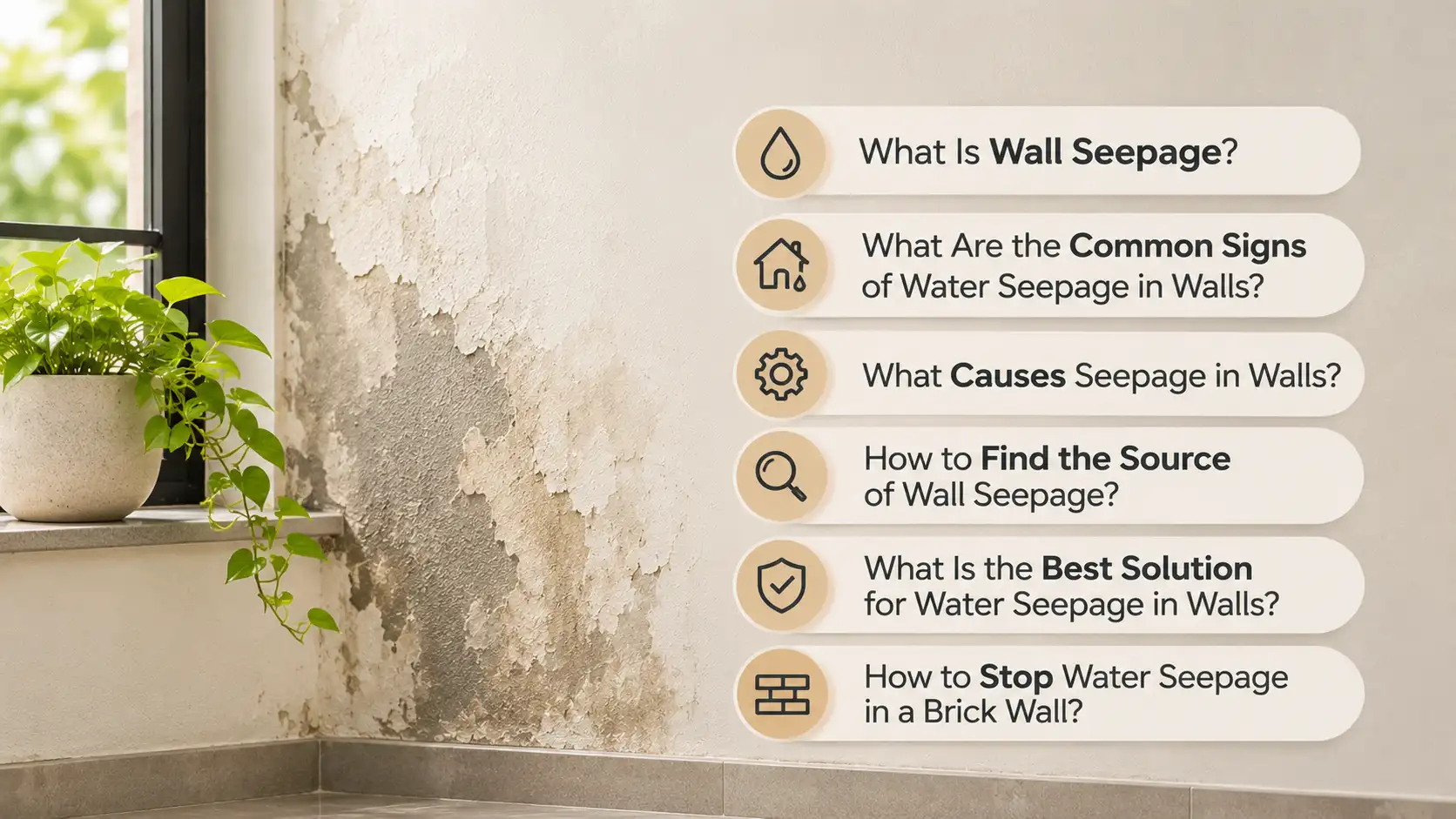
How to Stop Water Seepage in a Brick Wall?
Brick walls can absorb moisture because the bricks and mortar have microscopic pores. When rainwater or moisture enters these tiny gaps, damp patches can appear on the wall.
To learn how to stop water seepage in brick walls, follow these steps:
- Identify and seal cracks in the brickwork and plaster.
- Determine if water is coming through the roof, windows, or neighbouring pipes.
- Remove any loose and broken plaster from the affected area.
- Apply a waterproofing treatment appropriate to the wall condition.
- Allow the treated surface to dry thoroughly before repainting.
Use quality bricks, proper mortar, good plastering, and waterproofing materials during construction. Proper curing is also vital to reduce cracks and improve plaster quality.
Do not apply new paint immediately to a moist brick wall. Moisture may linger inside, causing the paint to peel again.
How to Repair External Wall Water Seepage?
Exterior walls face rain, sunlight, wind, and changing weather conditions year-round. Over time, cracks, damaged plaster, and gaps around windows can let water into the walls.
Fix external wall seepage early to prevent damage to your interior walls.
Here are several strategies to prevent and fix it:
- Inspect the outer wall: Look for cracks, damaged plaster, and open joints.
- Seal gaps: Use appropriate sealants around windows, doors, and other openings.
- Repair damaged surfaces: Remove any loose plaster and restore the affected areas.
- Apply exterior waterproofing: Select a weather-resistant coating based on the surface condition.
- Check roof drainage: Ensure that rainfall pipes and outlets are not clogged.
If the outer wall has large cracks or damage, consult an engineer before applying any coating.
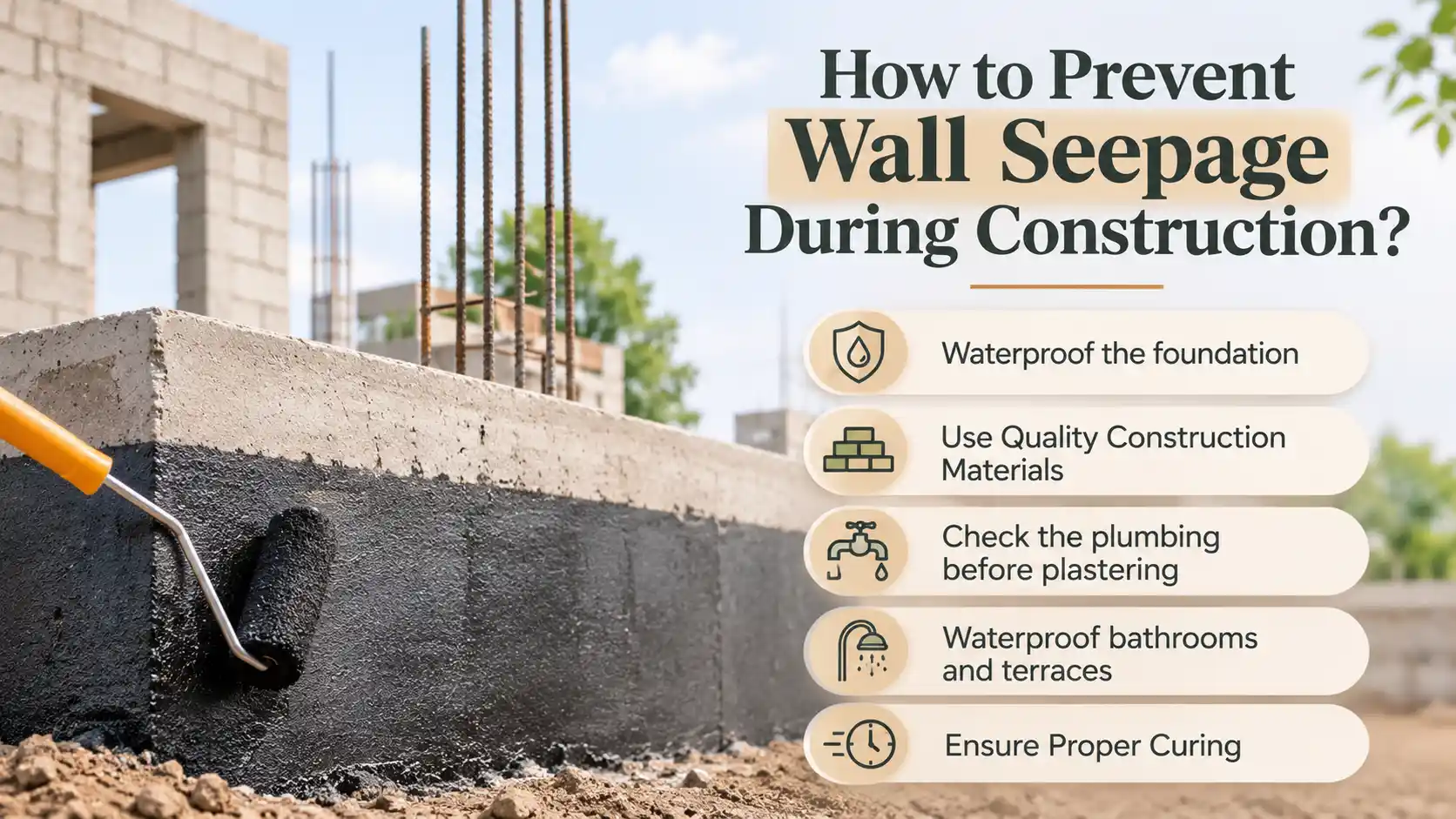
How to Prevent Wall Seepage During Construction?
Preventing water damage during construction is easier and cheaper than repairing walls later. Builders should prioritise waterproofing at every stage.
Here are a few crucial steps:
-
Waterproof the foundation
Apply a damp-proof coating to the foundation and all areas that touch the soil. This helps to limit moisture movement upwards through the walls.
-
Use Quality Construction Materials
Choose high-quality cement, sand, bricks, and waterproofing materials. Poor-quality materials can reduce wall strength and increase the likelihood of cracking.
-
Check the plumbing before plastering
Before plastering over water supply and drainage pipes, test them thoroughly. This helps to detect leaks early and prevents breaking finished walls later.
-
Waterproof bathrooms and terraces
Bathrooms, balconies, and terraces are frequently exposed to water. Apply appropriate waterproofing methods and inspect joints, corners, and drainage points thoroughly.
Allow adequate cure time for concrete and plaster. Proper curing reduces shrinkage cracks and promotes greater durability.
Plan these steps during construction, not after the house is complete.
When Should You Call a Professional for Wall Seepage Repair?
Small cracks are easy to fix, but continuous dampness needs proper inspection.
Seek expert assistance when:
- Damp areas return after painting.
- Water enters the walls whenever it rains.
- Large fractures develop on interior or exterior walls.
- Mould spreads to many areas.
- Plaster gets loose or starts to fall.
- You suspect concealed plumbing or structural problems.
Wall seepage repair starts with finding the water source, assessing the damaged area, and choosing the right repair method.
A construction expert can identify waterproofing issues early and suggest the right solutions.
Whether you are building a new home or fixing seepage problems, experienced Builders in Coimbatore can help you choose the right materials and waterproofing methods to keep your home safe and strong.


 Quality & Efficiency