Modern wall finishing has progressed from the old, dirty, and time-consuming cement plaster. Gypsum plaster has been a popular alternative due to its greater smoothness, strength, and efficiency. It provides a clever and ecological option for interior wall finishing in residential, commercial, and industrial buildings.
Let’s look at the top 10 benefits of utilising gypsum plaster for walls and how it’s revolutionising current construction techniques.
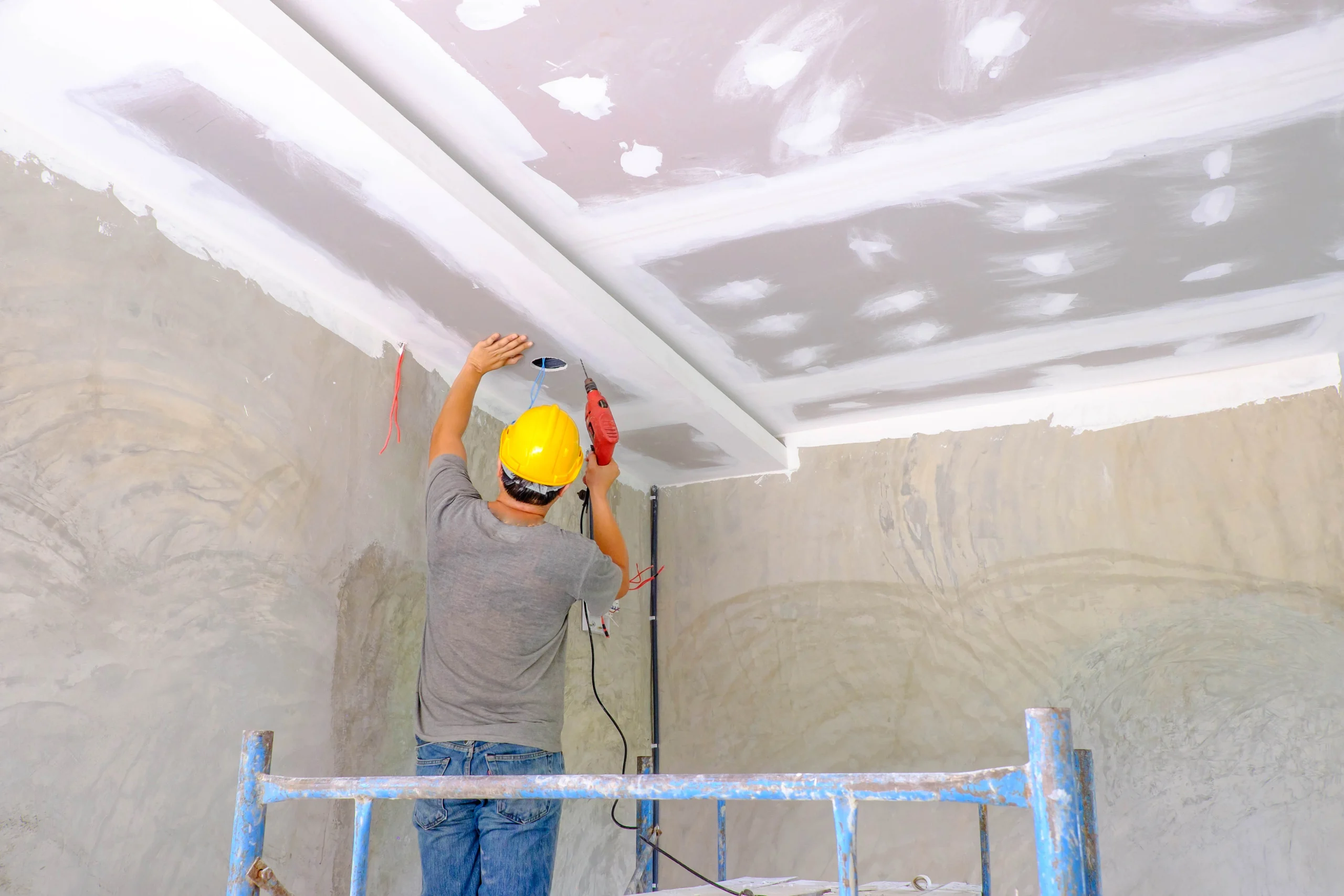
Gypsum plaster creates an incredibly smooth, homogenous surface ideal for painting or wallpapering. Unlike cement plaster, it does not require an extra coat of putty, which saves both labour and material expenses. The beautiful finish it offers lends an air of refinement and improves the overall visual appeal of spaces.
One of the most notable advantages of gypsum plaster is its rapid setting time. It normally dries in 24 to 48 hours, allowing for speedier project completion. This speed is especially useful for large-scale or time-sensitive building projects when deadlines are critical.
Gypsum plaster removes the requirement for traditional cement plaster’s 7-10 day drying phase, which consumes a substantial quantity of water. This helps preserve water and streamlines the construction process, making it both cost-effective and environmentally beneficial.
Gypsum’s intrinsic thermal qualities assist to manage indoor temperatures by reducing heat transmission. Walls coated with gypsum plaster improve energy efficiency by lowering reliance on air conditioning or heating systems, making them perfect for environmentally aware buildings.
Although lightweight, gypsum plaster creates a robust surface when applied. Its lower density reduces the structural pressure on structures, making it ideal for current high-rise projects.
Gypsum plaster, due to its elasticity and capacity to absorb slight structural disturbances, reduces the likelihood of cracking. Unlike cement plaster, which can develop hairline cracks owing to shrinkage, gypsum retains a smooth surface over time.
Another advantage of using gypsum plaster is its safety. Its chemical makeup includes water molecules, which release moisture when contacted to heat, thereby inhibiting fire propagation. The inherent fire resistance improves the safety of any construction.
Gypsum plaster not only insulates against heat but also provides excellent soundproofing. Its density aids in noise reduction between rooms, making it a good choice for workplaces, flats, schools, and hospitals where acoustic comfort is critical.
Gypsum plaster is a non-toxic, recyclable, and low-carbon building material that promotes sustainable construction techniques. It uses less water, generates less waste, and promotes a cleaner, dust-free work environment during application.
Gypsum plaster attaches nicely to a variety of surfaces, including brick, concrete, and block walls. It comes ready to use, minimising the amount of time spent mixing on-site. Building Contractors choose it because it is simple to apply, produces little waste, and dries quickly.
Gypsum plaster has several benefits that match the needs of modern design, ranging from aesthetic enhancement to increased construction efficiency. It’s long-lasting, environmentally friendly, easy to apply, and provides excellent thermal and acoustic insulation. For builders, designers, and homeowners looking for a better wall finish, gypsum plaster is the wiser, cleaner, and more sustainable option.
 Quality & Efficiency
We manage interior, commercial, industrial, and residential projects from conception to conclusion.
We deploy premium, long-lasting, and environmentally friendly materials that are customised to meet the unique needs of your project.
Project schedules differ according to site circumstances, design, scope, approvals, and material availability.
Yes, we provide completely personalised building solutions that are suited to your unique requirements and goals.
Yes, we oversee all required approvals and permits to ensure a seamless building process.
We specialize in Residential, Commercial, and Industrial construction, along with expert Interior design services.