As environmental consciousness grows, eco-friendly home construction has become a popular choice among homeowners looking for comfort, energy efficiency, and long-term value. Building a home is no longer simply about aesthetics or practicality; it is also about providing a better living environment while minimising environmental impact. Sustainable building strategies help homeowners create energy-efficient, comfortable, and durable homes while reducing environmental impact through smarter design choices and construction practices. 

Understanding sustainable building concepts will help you make informed decisions, whether you’re building a new house or looking into greener construction options.

What Is Eco-Friendly Home Construction?

Eco-friendly home construction focuses on planning and building homes with a low environmental impact throughout their lifetimes. This strategy prioritises energy efficiency, water conservation, renewable materials, and waste reduction while maintaining comfort and modern living standards.

These homes are thoughtfully designed to maximise natural light and ventilation, limit energy usage, and use materials that are long-lasting, recyclable, or locally produced. The end result is a home that helps both the environment and the owner.

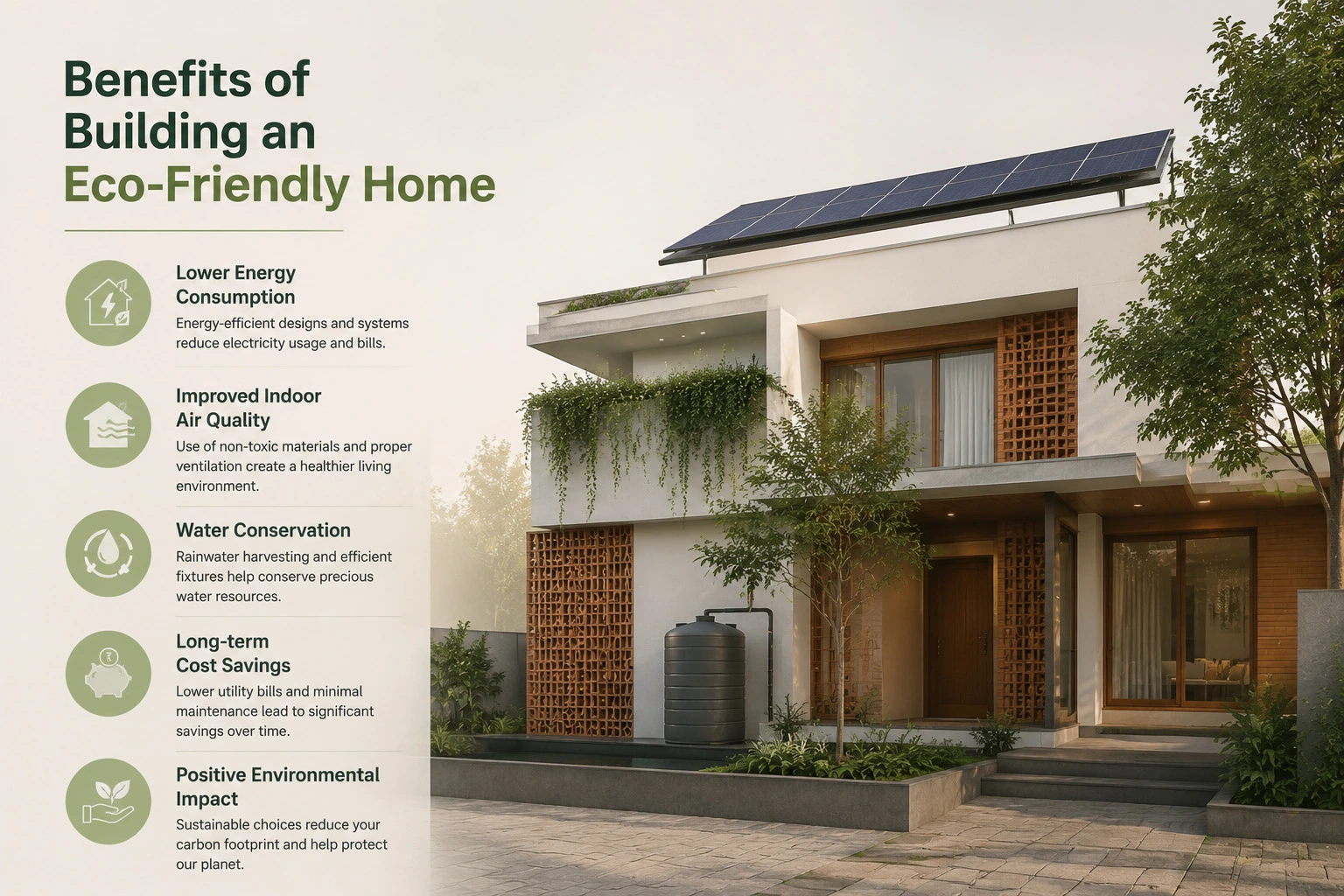
Benefits of Building an Eco-Friendly Home - brick by brick

Benefits of Building an Eco-Friendly Home

Besides environmental benefits, choosing sustainable building has several advantages.

Lower Energy Consumption

Energy-efficient homes use much less electricity due to improved insulation, LED lighting, solar panels, and energy-saving equipment. This lowers monthly utility bills while reducing reliance on traditional energy sources.

Improved Indoor Air Quality

Eco-friendly homes employ non-toxic coatings, low-VOC materials, and improved ventilation systems. These characteristics promote healthier indoor environments by lowering allergens and dangerous pollutants.

Water Conservation

Rainwater harvesting systems, water-efficient plumbing fixtures, and wastewater recycling technologies are common features in sustainable homes. These solutions cut water use while also promoting responsible resource management.

Long-term Cost Savings

Although sustainable building requires a somewhat greater initial investment, homeowners will benefit from lower maintenance costs, lower energy bills, and enhanced property value over time.

Positive Environmental Impact

Green building approaches reduce carbon emissions, construction waste, and natural resource depletion, resulting in a cleaner and healthier environment.

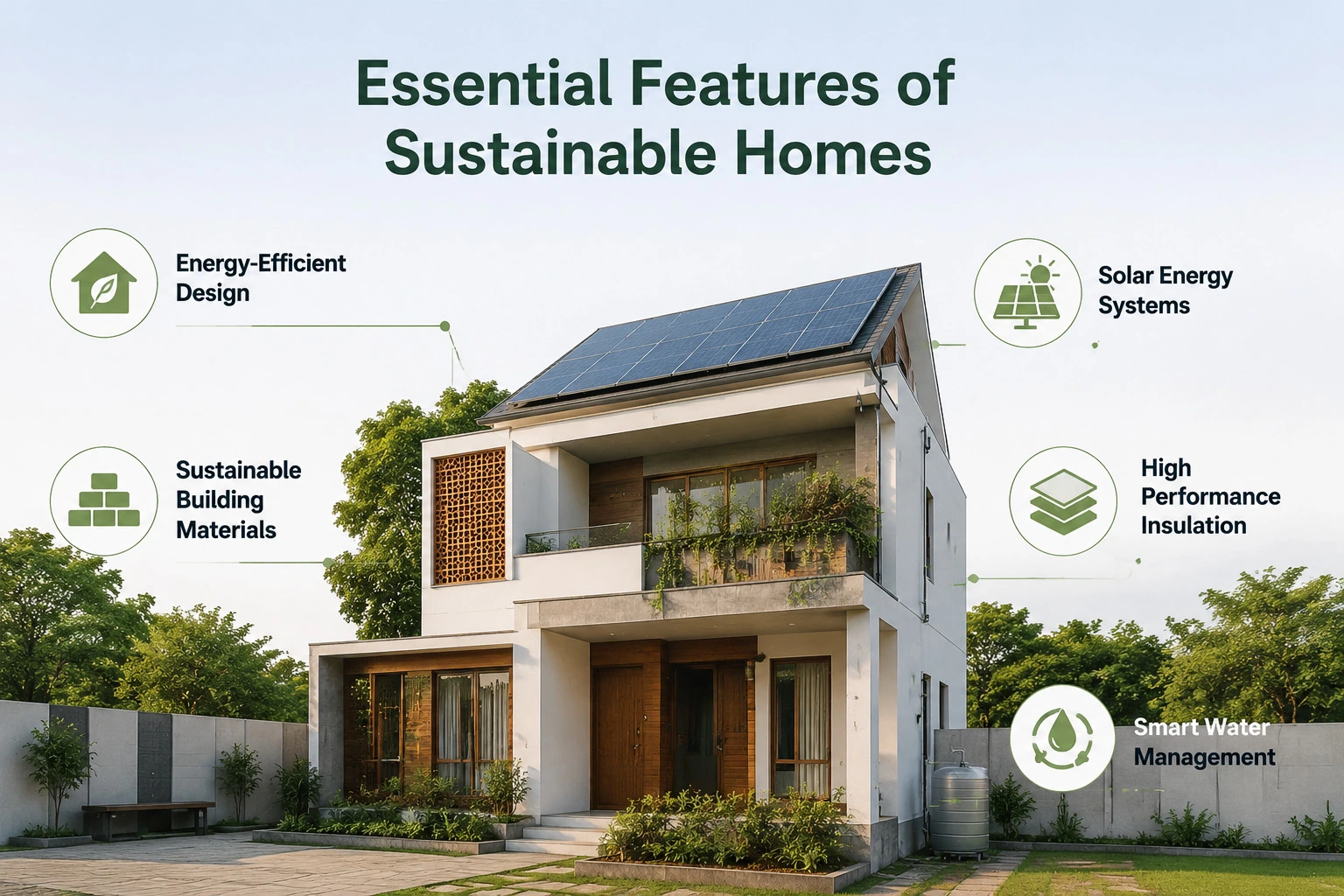
Essential Features of Sustainable Homes - Brick by Brick construction

Essential Features of Sustainable Homes

Modern sustainable homes incorporate a variety of design and construction strategies to improve efficiency and comfort.

Energy-Efficient Design

Homes are built to maximise sunshine and natural airflow, thereby reducing the need for artificial lighting and air conditioning.

Sustainable Building Materials

Builders are increasingly using recycled steel, fly ash concrete, bamboo, reclaimed wood, and locally produced materials to reduce environmental impact while maintaining durability.

Solar Energy Systems

Solar panels provide renewable energy for everyday household requirements, lowering electricity costs and reducing reliance on fossil fuels.

High Performance Insulation

Proper insulation keeps indoor temperatures comfortable year-round while reducing heating and cooling costs.

Smart Water Management

Water-saving fixtures, rainwater harvesting, and effective irrigation systems drastically minimise water waste.

Choosing Sustainable Materials

Green construction relies heavily on material selection.

Popular environmentally friendly building materials include:

🔹 Bamboo Flooring

🔹 Recycled steel

🔹 Fly-ash bricks

🔹 AAC Blocks

🔹 Reclaimed Timber

🔹 Low-VOC paints

🔹 Natural Stone

🔹 Recycled glass

These materials not only have a lower environmental impact but are also more durable and energy-efficient.

Smart Technology in Green Homes

Technology has become an indispensable part of modern green living.

Smart thermostats manage household temperatures automatically, while motion-sensor lighting reduces energy waste. Smart irrigation systems adjust water use based on weather conditions, while energy monitoring devices let homes track and reduce electricity consumption.

These technologies support sustainable living while increasing overall efficiency.

The Role of Greenhouse Construction

Many homeowners are adding greenhouse construction into their home renovations. A greenhouse enables families to grow fresh vegetables, herbs, and beautiful plants all year, boosting self-sufficiency.

Modern greenhouse designs incorporate efficient ventilation, rainwater collection systems, and solar-powered lighting to produce ecologically friendly growing environments. Combining a greenhouse and an environmentally efficient residence improves sustainability by boosting local food production and lowering transportation emissions.

Greenhouses also improve the surrounding scenery and provide educational and recreational opportunities for families.

Designing for Natural Comfort

Proper architectural planning greatly enhances sustainability.

Builders carefully arrange windows to maximise natural sunshine while minimising heat gain. Cross-ventilation allows fresh air to circulate naturally, reducing the need for mechanical cooling systems.

Shading devices, roof insulation, and reflective roofing materials all help to increase thermal comfort across the seasons.

Landscaping also helps with sustainability. Native plants require less water and maintenance, yet strategically planted trees give natural shade, lowering indoor temperatures.

Waste Management During Construction

Construction waste causes major environmental pollution. Sustainable builders use waste management strategies such as:

  • Recycling construction debris 
  • Reusing unused materials
  • Reducing packaging waste
  • Hazardous materials should be disposed of responsibly
  • Accurate material planning to minimize excess

These approaches cut landfill waste and project expenses.

Government Support for Green Construction

Many governments promote sustainable construction practices by offering incentives, certifications, and energy-efficiency programs. Green building certifications recognise developments that meet established environmental criteria and often boost property value.

As environmental restrictions evolve, sustainable construction becomes more vital for future residential developments.

Why Eco-Friendly Homes Are the Future

Homebuyers today seek residences that offer more than just appealing designs. Energy efficiency, environmental responsibility, and healthier living conditions have all become important considerations in decision-making.

Builders who use sustainable construction technologies are better positioned to fulfil future market demands and provide long-term value to homeowners.

Investing in green development now benefits present people while also preserving natural resources for future generations.
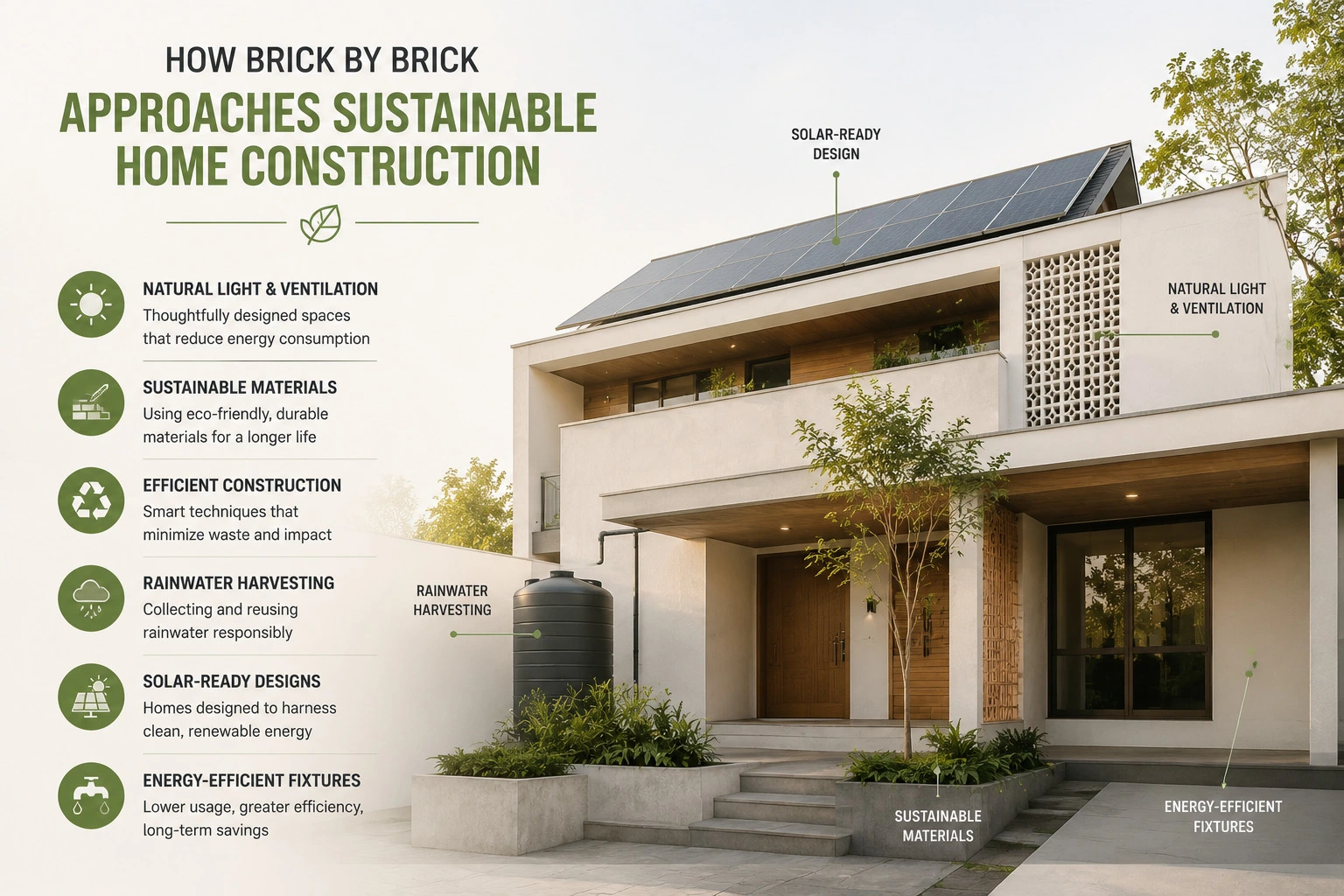
How Brick by Brick Approaches Sustainable Home Construction

How Brick by Brick Approaches Sustainable Home Construction

At Brick by Brick, sustainability is at the heart of every project we undertake. We carefully design homes to enhance natural light and ventilation, thereby reducing unnecessary energy consumption. To reduce waste, our team uses long-lasting, environmentally friendly building materials and employs efficient construction techniques. 

We also encourage the use of rainwater collection systems, energy-efficient fixtures, and solar-ready designs to promote long-term sustainability. We construct comfortable, resource-efficient, built-to-last homes by combining exceptional craftsmanship with environmentally responsible building practices.

Conclusion

Choosing eco-friendly home construction ensures a better quality of life, lower running expenses, and a more sustainable future. By integrating energy-efficient design, ecologically responsible materials, renewable energy systems, and smart technologies, homeowners can create comfortable living spaces that benefit both their families and the environment.

Whether you’re building your ideal home or adding amenities like greenhouse construction, employing sustainable techniques contributes to robust, resource-efficient structures built for the future. As more individuals recognise the benefits of green and sustainable housing, eco-friendly development will continue to shape the future of residential living.